Lasik Corneal Flap Healing

17 Helpful Tips For Anyone Getting Lasik Or Prk Eye Surgery
First Week Of Lasik Recovery Merrillville In The First Week Of La
/detached-lasik-flap(640).jpg)
Lasik Flap Dislocation The Flap Never Heals
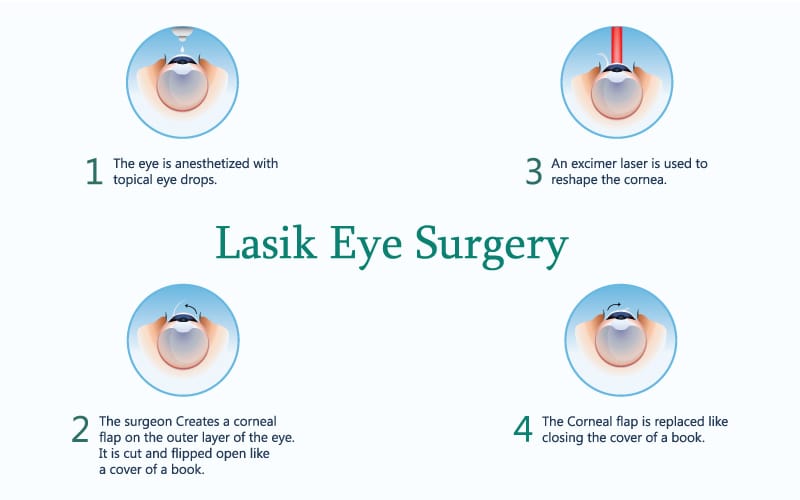
Lasik Eye Surgery Near Boynton Beach Lake Worth Fl

Lasik New Jersey No Flap Lasek New Jersey Clei
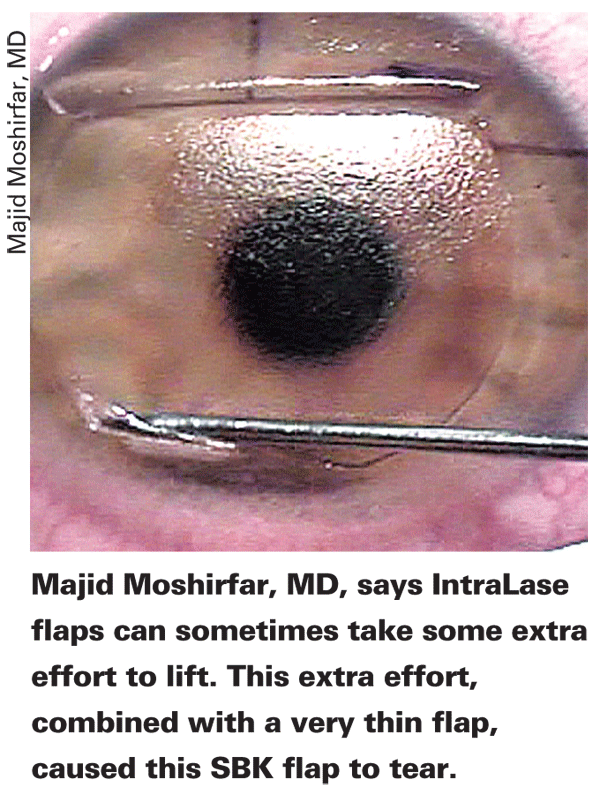
Who Needs A Thin Flap Lasik Procedure
The creation of the corneal flap with LASIK allows the protective layer to be preserved and provides for a more rapid and comfortable visual recovery The surface corneal layers are more sensitive than the layers treated with LASIK, therefore healing time is reduced compared to PRK The intraoperative risks with LASIK however are greater with.

Lasik corneal flap healing. Answer LASIK flap healing The LASIK flap heals back into its original position and the healing process is not limited to he edge alone The healed flap is stable and unlikely to dislodge with eye rubbing Significant eye trauma could potentially dislocate the flap, however, such instances are rare Flap creation making use of the femtosecond laser provides for even greater stability and reduced chances of flap movement or dislocation. Let’s get down to the direct questions Can the flap be moved after LASIK?. Using a rabbit model, we recently showed that the addition of sutures at the flap edge after LASIK reduces the amount of corneal steepening when the IOP was artificially increased 3 A significant increase in the amount of myofibroblasts was induced by the sutures, which may be responsible for this behavior We postulated that the myofibroblasts at the flap edge may induce a stronger wound healing reaction, which may act as a belt to prevent the bulging effect of the central cornea when the.
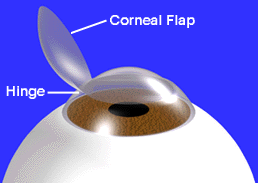
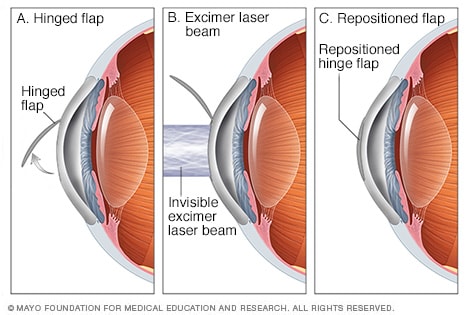
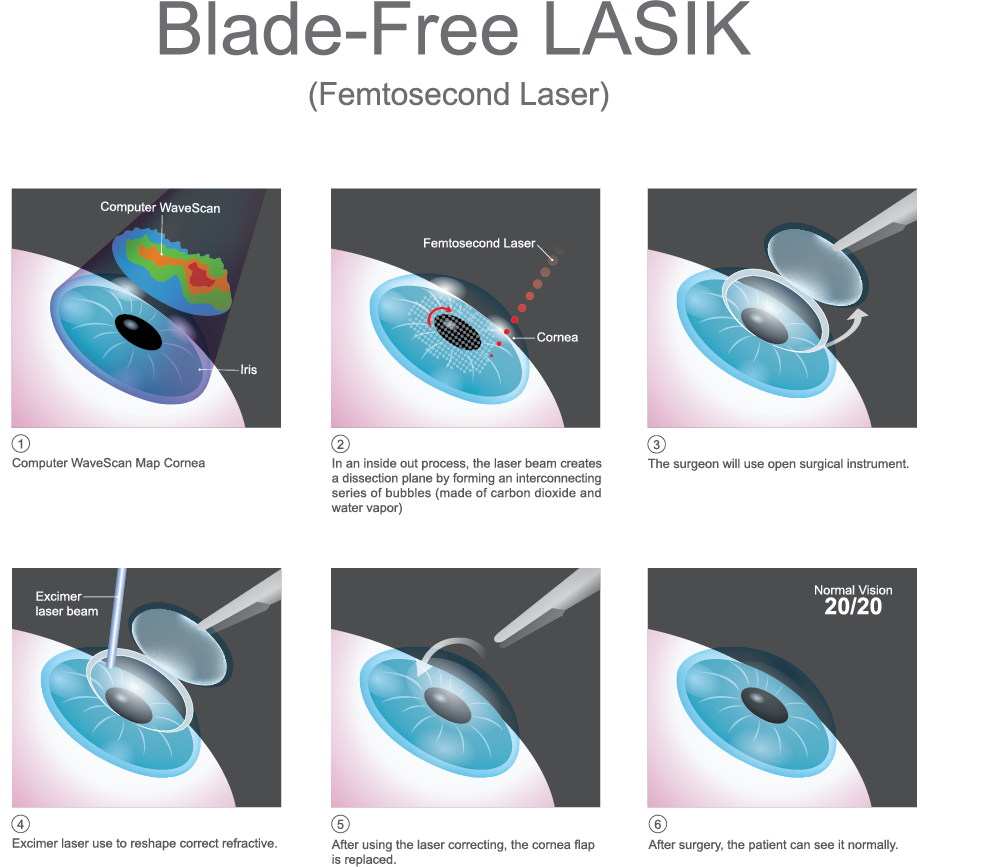
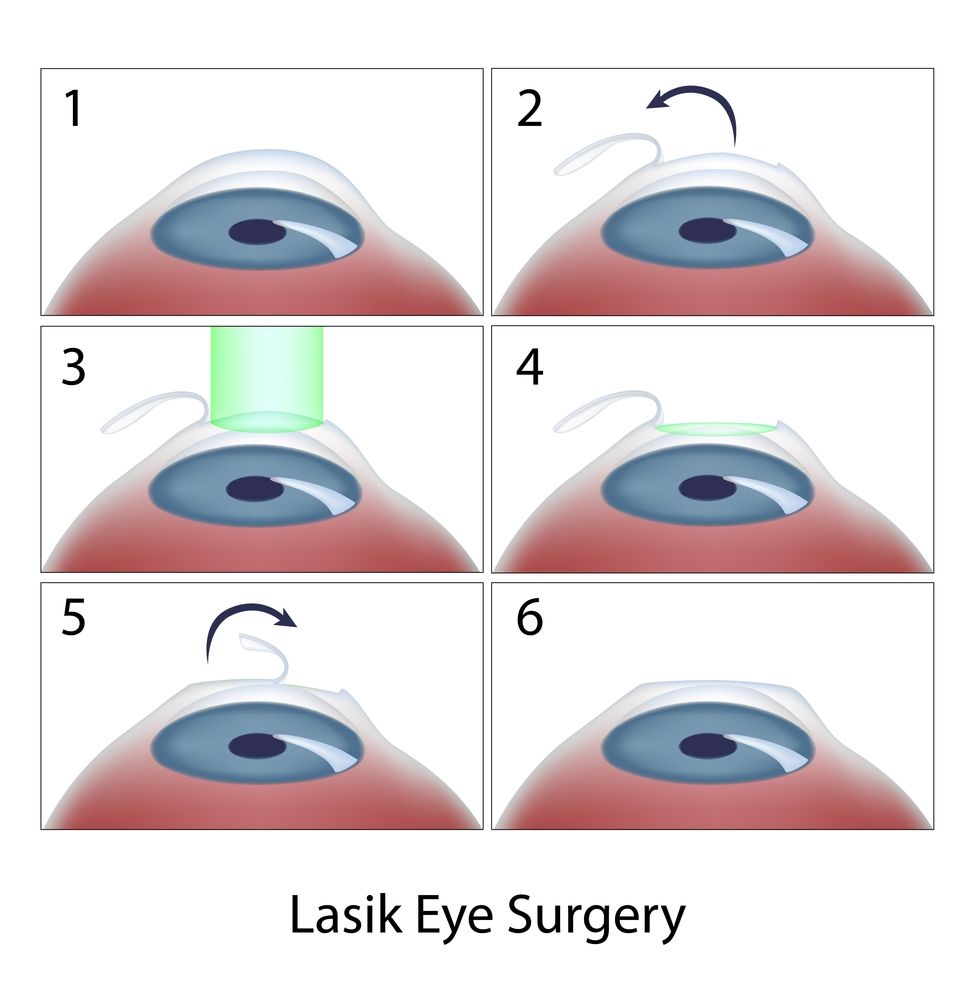
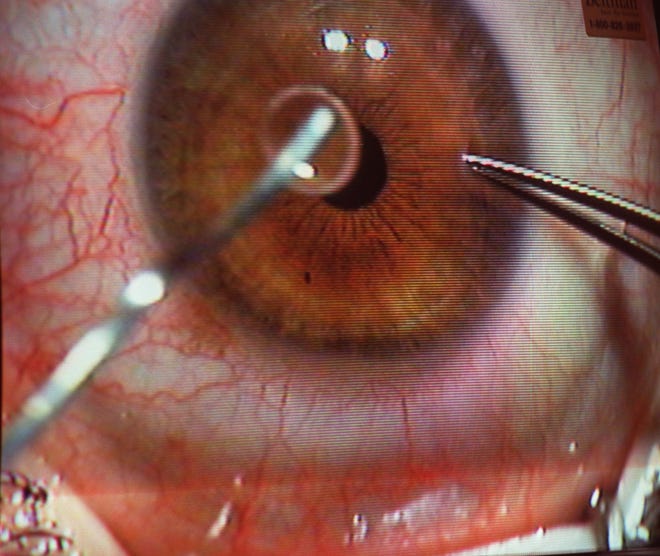
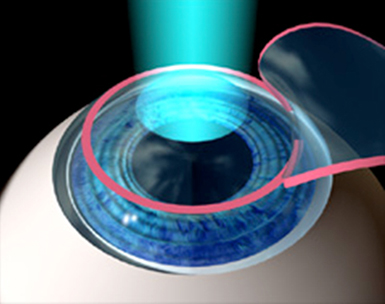
In fact, with the use of a LASIK flap, the corneal tissue can be as much as 90% healed within 24 hours During the first day or two after surgery, the outer surface of the cornea, known as the epithelium, seals the edges of the corneal flap Over the next few weeks, natural substances inside your cornea bond the corneal flap to the underlying tissue While the corneal flap will be securely in place and the risk of it becoming dislodged while you heal is extremely uncommon, we recommend that. ILASIK combines the accuracy of the Excimer laser with the quick healing characteristics of a Femtosecond created flap Using a Femtosecond laser, a thin, protective flap of corneal tissue, attached by a hinge on one side, is folded back so the inner tissue of the cornea (stroma) can be treated with the excimer laser. By moving this top layer of the cornea back, a LASIK surgeon can then reshape and recontour the corneal surface and improve the passage of light through the eye Once the corneal reshaping is commplete, the flap is set back down Flaws in the healing of the flap are referred to as a flap complication.
Schmack et al found that the wound margin of LASIK flap heals by producing peripheral hypercellular fibrotic stromal scar, which is about 281% as strong as normal corneal stroma. The corneal flap begins healing immediately after the LASIK procedure In fact, with the use of a LASIK flap, the corneal tissue can be as much as 90% healed within 24 hours During the first day or two after surgery, the outer surface of the cornea, known as the epithelium, seals the edges of the corneal flap. LASIK vision surgery can correct farsightedness, nearsightedness, and astigmatism During LASIK near Birmingham, our advanced laser creates a small flap across the cornea Our team then reshapes the cornea as needed and then places the flap back into position Patients who receive LASIK can also enjoy fast recovery times with few side effects.
Your corneal flap begins healing immediately after the surgery It will be mostly healed after 24 hours after your procedure For more information about healing times, check out our post on the LASIK recovery timeline How do I know if my corneal flap moved?. It's important to understand that the LASIK flap is a separation between layers of collagen within the cornea Although it is true that such flaps may be lifted years after the original procedure, the flap does adhere back to the underlying collagen quite well within a few weeks after surgery, particularly for flaps made with a femtosecond laser So I would challenge your claim that the flap never heals. ILASIK combines the accuracy of the Excimer laser with the quick healing characteristics of a Femtosecond created flap Using a Femtosecond laser, a thin, protective flap of corneal tissue, attached by a hinge on one side, is folded back so the inner tissue of the cornea (stroma) can be treated with the excimer laser.
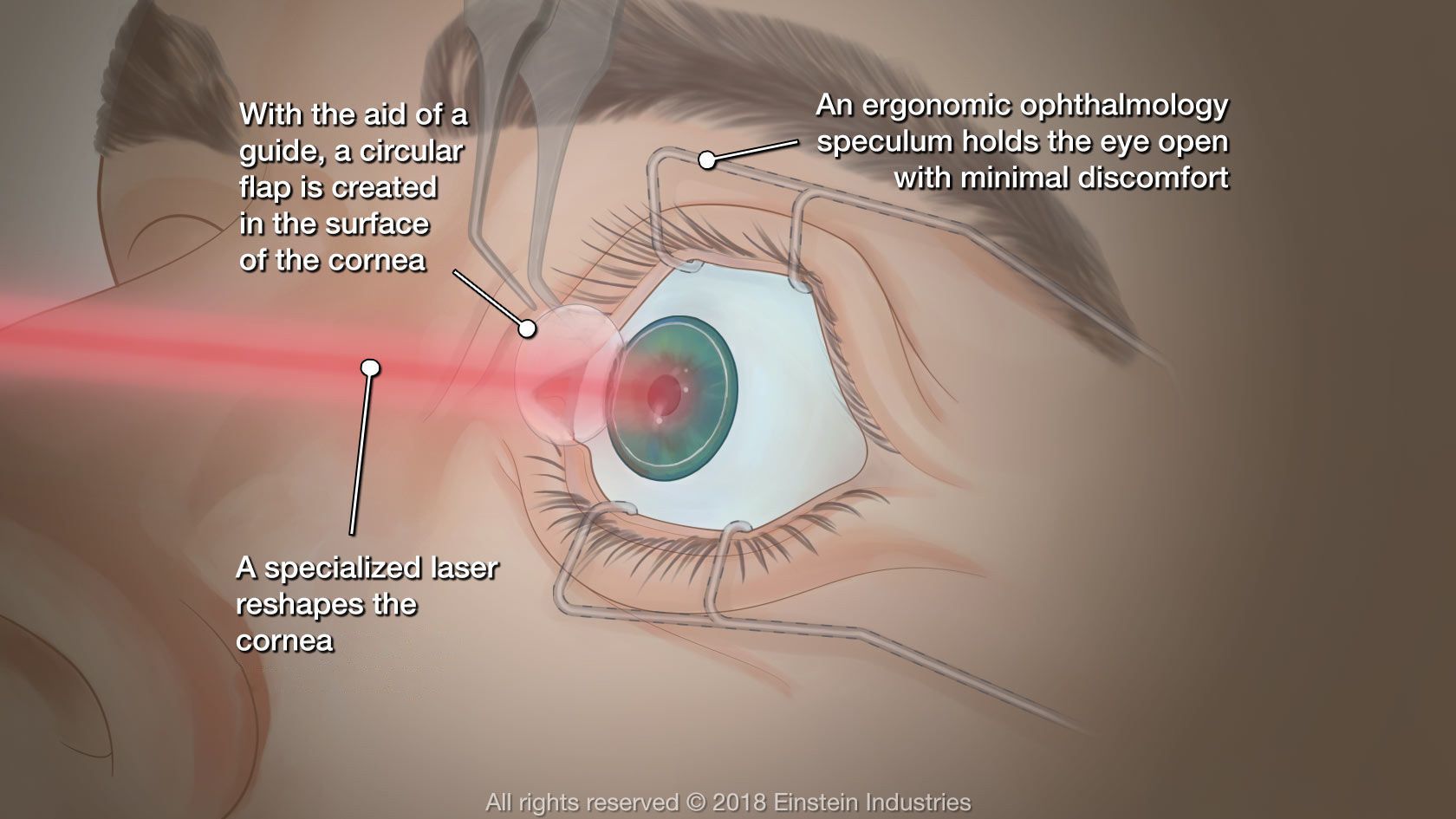
In fact, with the use of a LASIK flap, the corneal tissue can be as much as 90% healed within 24 hours During the first day or two after surgery, the outer surface of the cornea, known as the epithelium, seals the edges of the corneal flap Over the next few weeks, natural substances inside your cornea bond the corneal flap to the underlying tissue While the corneal flap will be securely in place and the risk of it becoming dislodged while you heal is extremely uncommon, we recommend that. How Does Lasik Work?. LASIK Laserassisted in situ keratomileusis (LASIK) also corrects nearsightedness, farsightedness, and astigmatism by reshaping the cornea The procedure begins with the creation of a corneal flap Dr Holzman uses a bladefree technique to precisely and safely create this flap.
LASIK vision surgery can correct farsightedness, nearsightedness, and astigmatism During LASIK near Birmingham, our advanced laser creates a small flap across the cornea Our team then reshapes the cornea as needed and then places the flap back into position Patients who receive LASIK can also enjoy fast recovery times with few side effects. Initial recovery time is longer LASIK Many people notice better vision within days of PRK, but it can take several days for the epithelium to heal and up to three months for vision to stabilize. The corneal flap begins healing immediately after the LASIK procedure In fact, with the use of a LASIK flap, the corneal tissue can be as much as 90% healed within 24 hours During the first day or two after surgery, the outer surface of the cornea, known as the epithelium, seals the edges of the corneal flap Over the next few weeks, natural substances inside your cornea bond the corneal flap to the underlying tissue.
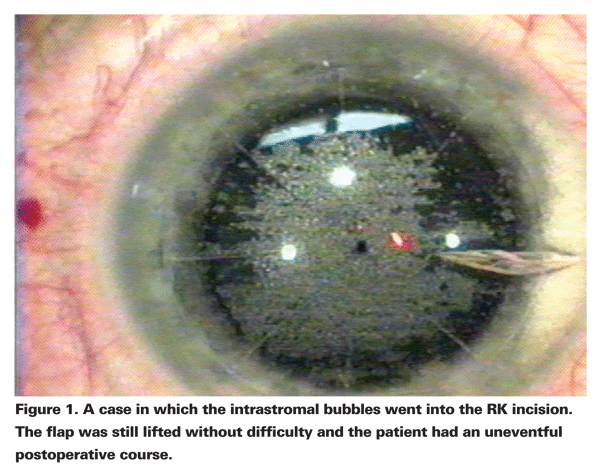
ILASIK combines the accuracy of the Excimer laser with the quick healing characteristics of a Femtosecond created flap Using a Femtosecond laser, a thin, protective flap of corneal tissue, attached by a hinge on one side, is folded back so the inner tissue of the cornea (stroma) can be treated with the excimer laser. The femtosecond solidstate laser used to make LASIK flaps has had an increasing role in refractive and corneal surgery 1 This laser uses thousands of ultrashort (approximately 600 femtosecond) pulses of focused nearinfrared light (1053 nm) to create microcavitations that separate the corneal tissue A high peak power leads to shock waves and intrastromal cavitation bubbles that coalesce and disappear after a few minutes. The corneal flap begins healing immediately after the LASIK procedure In fact, with the use of a LASIK flap, the corneal tissue can be as much as 90% healed within 24 hours During the first day or two after surgery, the outer surface of the cornea, known as the epithelium, seals the edges of the corneal flap.
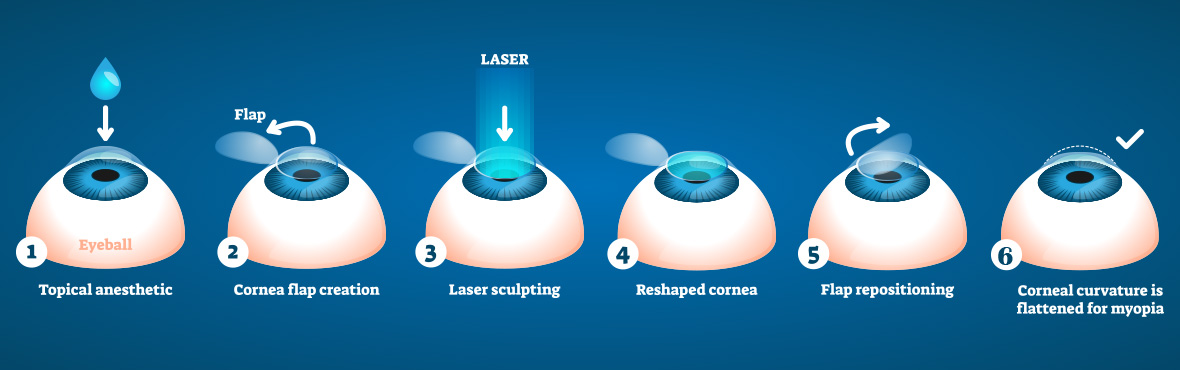
In a LASIK procedure, this is done using a femtosecond laser instead of a scalpel This corneal flap is folded back and another laser reshapes the middle layer of your cornea, correcting imperfections responsible for your vision deficit Once the sculpting is done, the flap is flipped back into place and your cornea usually heals within 48 hours. Myth A common concern about Lasik surgery is that the corneal flap will never heal To break it down quite simplygive it some time In the early days after Lasik, wounds should be handled with great care because that’s when the eye is most vulnerable and susceptible to trauma The flap is basically being held into place by osmotic pressure and even excessive eye rubbing could dislodge it. Small wrinkles called striae (pronounced stri’e) can occur in the corneal flap after LASIK surgery Usually they do not interfere with a LASIK patient’s vision and not additional treatment is needed However, sometimes the striae are serious enough to decrease visual acuity.
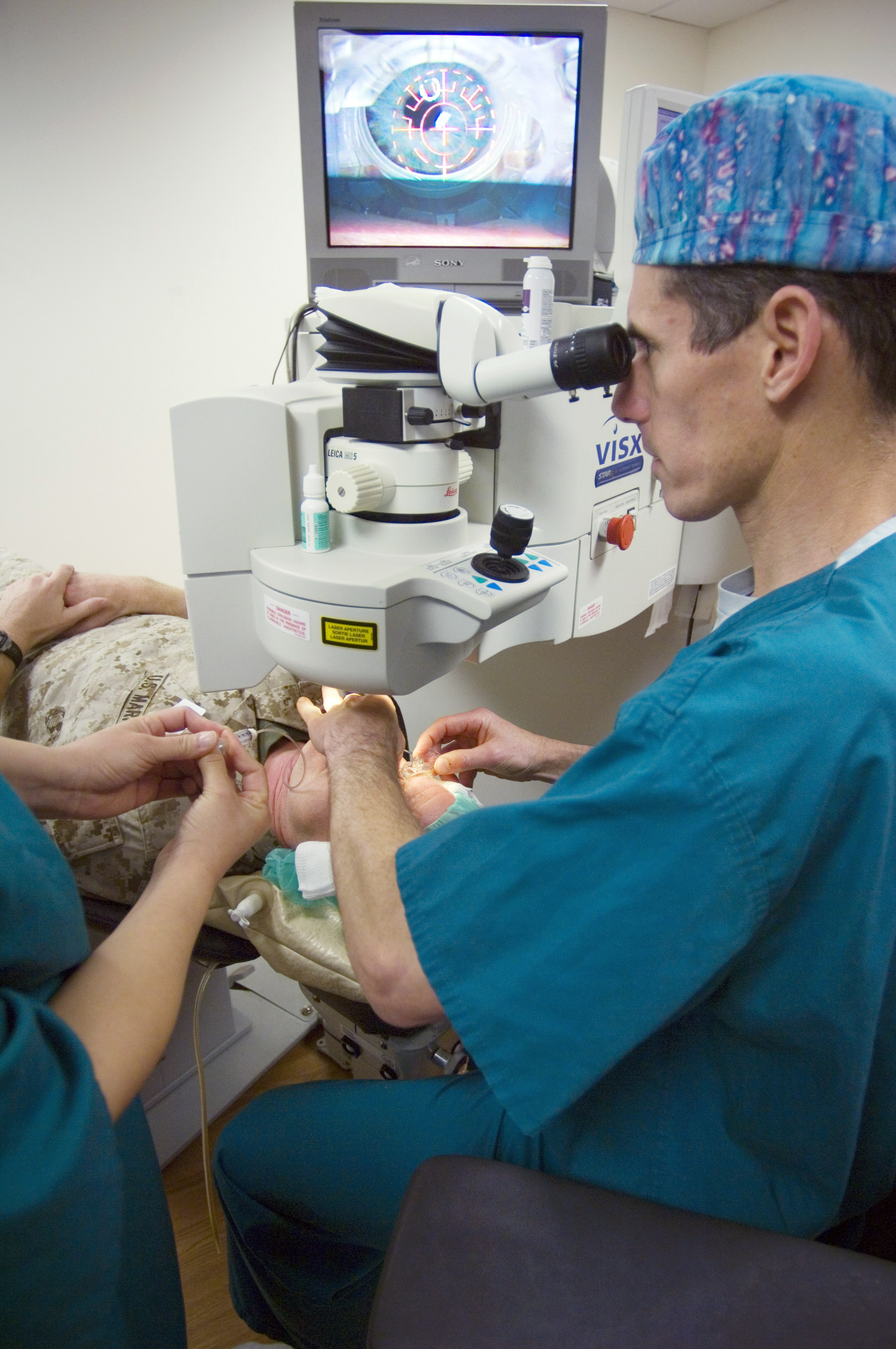
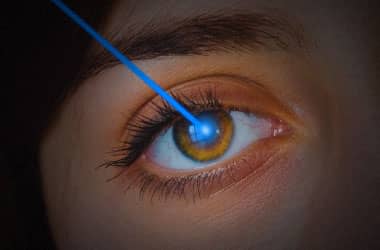
The corneal flap begins healing immediately after the LASIK procedure In fact, with the use of a LASIK flap, the corneal tissue can be as much as 90% healed within 24 hours During the first day or two after surgery, the outer surface of the cornea, known as the epithelium, seals the edges of the corneal flap Over the next few weeks, natural substances inside your cornea bond the corneal flap to the underlying tissue. LASIK surgery uses ultraviolet beams of excimer lasers to correct visual acuity At Griffin & Reed Eye Care, the stateoftheart VISX Star S4 IR Excimer Laser produces a cool ultraviolet light, removing a small amount of corneal tissue typically less than the thickness of a human hair and allowing light to be more sharply focused on the retina Then, the flap is gently folded back to expose the next level of tissue, called the stroma. How Does Lasik Work?.
The corneal flap begins healing immediately after the LASIK procedure In fact, with the use of a LASIK flap, the corneal tissue can be as much as 90% healed within 24 hours During the first day or two after surgery, the outer surface of the cornea, known as the epithelium, seals the edges of the corneal flap. The corneal flap begins healing immediately after the LASIK procedure In fact, with the use of a LASIK flap, the corneal tissue can be as much as 90% healed within 24 hours During the first day or two after surgery, the outer surface of the cornea, known as the epithelium, seals the edges of the corneal flap. During LASIK surgery, a small flap is created in the frontal, topmost layer of the cornea This layer is called the epithelium Using this epithelial flap, the cornea can be reshaped and recontoured as needed to address refractive errors (ie, myopia/nearsightedness, hyperopia/farsightedness, and astigmatism) What are flap complications?.
Epithelial tissue, which is the eye’s skin, starts to heal from the incision almost immediately and in just a day;. The fact is that the corneal flap made in LASIK is selfhealing Initially, this vacuum effect keeps it in position, with the cells lining the inner surface of your cornea, known as endothelial cells, pumping water out to the inner part of the eye and the suction holding it in place During the first day or two after surgery, the outer surface of the cornea, known as the epithelium, seals the edges of the corneal flap. Like any surgery, LASIK surgery does come with risks After the first day of healing your flap can move, but only.
While LASIK requires creating a flap in the cornea to reshape it, SMILE simply reshapes the cornea by flattening it This eliminates the risk of corneal scarring or the corneal flap detaching from your eye, and makes SMILE a good option for those with thin corneas who are not good candidates for LASIK. Again, the potential corneal flap as a result of LASIK poses a risk for competitive athletes or patients with a higher chance of eye injury, so they should instead consider PRK Once your eyes heal. Another complication that can occur is creation of small flap that gives insufficient size of corneal stromal bed for laser ablation These lasik complications can be treated by replacing the flap again and allow it to heal for few months and then undergo another lasik procedures.
When performing all laser LASIK, our physicians use a gentle laser to create the corneal flap This technology, also used to facilitate laser cataract surgery, allows them to better customize the corneal flap for each patientAs the name states, no blades are used in this kind of laser eye surgery. LASIK (Laser Assisted in Situ Keratomileusis) is a surgical procedure which involves reshaping your cornea with laser to help improve eye sight By creating a ‘door’ (which we call – Flap) on the surface of your eye, your surgeon can correct vision problems;. Many wonder whether the flap ever really heals completely Even though your Sacramento LASIK professional can potentially raise the flap again in future procedures if necessary, this is not a problem for those who have the LASIK procedure, as they do not feel the flap.
The corneal flap begins healing immediately after the LASIK procedure In fact, with the use of a LASIK flap, the corneal tissue can be as much as 90% healed within 24 hours During the first day or two after surgery, the outer surface of the cornea, known as the epithelium, seals the edges of the corneal flap Over the next few weeks, natural substances inside your cornea bond the corneal flap to the underlying tissue. A study performed on human eye bank corneas from donors that had LASIK showed that the mean peak tensile strength of the flap wound margin reached a maximum value of around 281% of control corneas (between 35 and 65 years after LASIK) but the central and paracentral LASIK wounds reached only 24% of its normal strength10. By moving this top layer of the cornea back, a LASIK surgeon can then reshape and recontour the corneal surface and improve the passage of light through the eye Once the corneal reshaping is commplete, the flap is set back down Flaws in the healing of the flap are referred to as a flap complication.
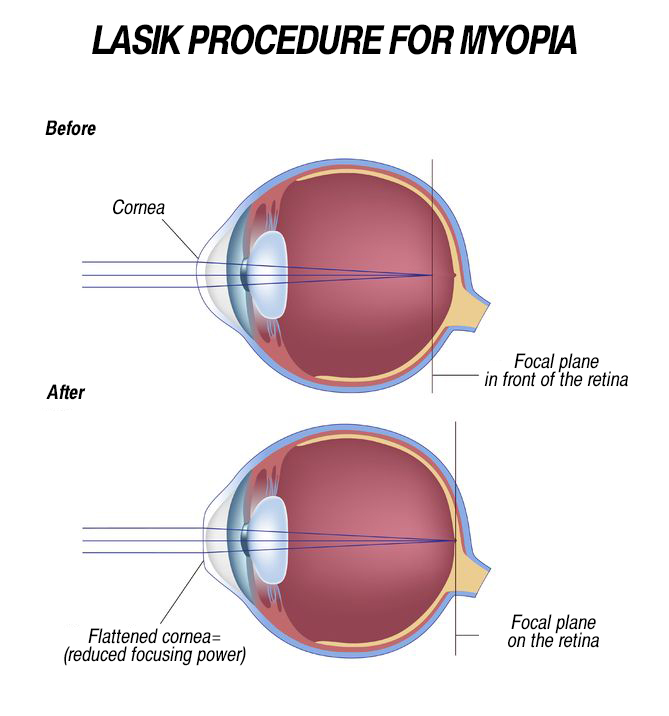
How Does Lasik Work?. LASIK (Laser assisted insitu keratomileusis) is an elective eye “reshaping” surgical procedure used to improve the refractive state of the eye and decrease the dependency on contact lenses or glasses It is used on nearsighted, farsighted and astigmatic eyes LASIK surgery typically results in rapid recovery of vision. In corneal refractive surgery, LASIK is unique in that it necessitates two lasers—a femtosecond laser for flap creation and an excimer laser to reshape the corneal curvature Flap creation significantly accelerates visual recovery, which lends itself to nearinstant gratification for patients.
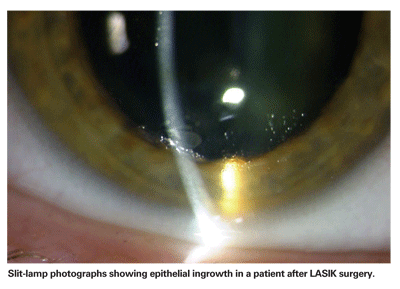
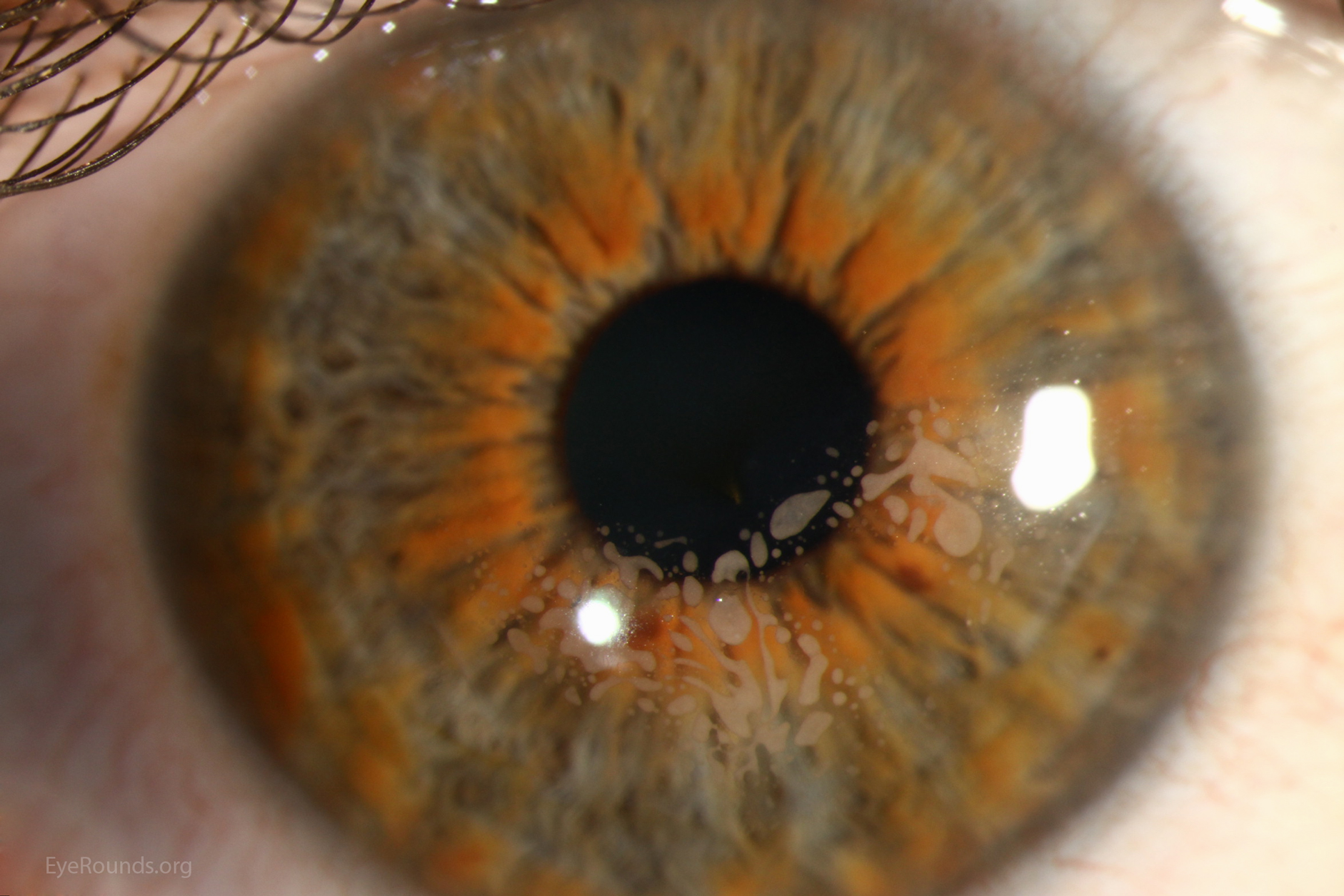
OCT typically shows corneal thinning in the stroma and possibly the flap (Figure B, available in the online version of this article) 11,16 Our patients demonstrated thinning of the cornea in the. Flap complications occur during the healing process and essentially mean errors in the healing of this epithelial flap This could mean an uneven corneal surface or just poor healing of the corneal flap in general These complications can result in issues with vision as well as issues with patient comfort Eye Problems Caused by Flap Complications The following issues may arise if patients experience a flap complication after they undergo LASIK surgery. The corneal flap begins healing immediately after the LASIK procedure In fact, with the use of a LASIK flap, the corneal tissue can be as much as 90% healed within 24 hours During the first day or two after surgery, the outer surface of the cornea, known as the epithelium, seals the edges of the corneal flap Over the next few weeks, natural substances inside your cornea bond the corneal flap to the underlying tissue.
LASIK is a treatment for the correction of myopia, hyperopia and astigmatism It has advantages over photorefractive keratectomy, such as less postoperative pain and more rapid recovery, but. As your LASIK corneal flap is healing, your eyes will likely still be irritated Meanwhile, your vision may or may not begin clearing If the latter is true for you, don’t panic Vision fluctuation after LASIK is typical after LASIK surgery, and part of your LASIK recovery time may involve some blurred vision At the 1st week mark after LASIK. On the other hand, the LASIK flap wound margin heals by producing a 10fold stronger peripheral scar that is on average 281% as strong as normal corneal stroma This pattern of wound healing explains why LASIK surgeons can relift the LASIK flap with out complications, even years after it was originally created, to perform a LASIK retreatment.
A LASIK flap wound never heals completely, said Dr Schocket, who’s experienced a dislocation twice In fact, studies have shown that the strength of the healed wound margin is on average only 28% of the normal cornea 1 This can lead to flap dislocation during retina surgery “I’ve learned to specifically ask patients multiple times whether they’ve had LASIK, not just eye surgery,” she said, “because many don’t think of it as a surgical procedure” (See “Dislocation of a. And if so, how can you tell if it’s moved?. On the day of the procedure, you can expect the following Preparation LASIK with IntraLase is an outpatient operation that takes about 10 to 15 minutes per eye, so you will be First stage Your eye surgeon will use the IntraLase femtosecond laser to create the flap in your cornea While the.
ILASIK combines the accuracy of the Excimer laser with the quick healing characteristics of a Femtosecond created flap Using a Femtosecond laser, a thin, protective flap of corneal tissue, attached by a hinge on one side, is folded back so the inner tissue of the cornea (stroma) can be treated with the excimer laser. "The healing process at the corneal flap wound interface persists for several months after LASIK, which consists of disorganized collagen fibers that can be seen along the interface of the corneal flap creating a hypocellular primitive stromal scar9,10 The risk of trauma, such as that associated with some occupations or participation in sports, should be discussed with the patient preoperatively and during followup to LASIK surgery. In corneal refractive surgery, LASIK is unique in that it necessitates two lasers—a femtosecond laser for flap creation and an excimer laser to reshape the corneal curvature Flap creation significantly accelerates visual recovery, which lends itself to nearinstant gratification for patients.
In fact, with the use of a LASIK flap, the corneal tissue can be as much as 90% healed within 24 hours During the first day or two after surgery, the outer surface of the cornea, known as the epithelium, seals the edges of the corneal flap Over the next few weeks, natural substances inside your cornea bond the corneal flap to the underlying tissue While the corneal flap will be securely in place and the risk of it becoming dislodged while you heal is extremely uncommon, we recommend that. Answer The LASIK flap NEVER HEALS this is why years after LASIK you can get poked in the eye and the flap can come back upevery LASIK surgeon who has seen over 10,000 cases has seen at least one flap ripped off by trauma)if you play contact sports and are concerned about this then just get LASEK, the recovery is 12 days longer but the eye is 100x stronger after bc there is no flap, no cut, no chance of your flap getting poked up or torn off after!. LASIK vision surgery can correct farsightedness, nearsightedness, and astigmatism During LASIK near Birmingham, our advanced laser creates a small flap across the cornea Our team then reshapes the cornea as needed and then places the flap back into position Patients who receive LASIK can also enjoy fast recovery times with few side effects.
ILASIK combines the accuracy of the Excimer laser with the quick healing characteristics of a Femtosecond created flap Using a Femtosecond laser, a thin, protective flap of corneal tissue, attached by a hinge on one side, is folded back so the inner tissue of the cornea (stroma) can be treated with the excimer laser. When performing all laser LASIK, our physicians use a gentle laser to create the corneal flap This technology, also used to facilitate laser cataract surgery, allows them to better customize the corneal flap for each patientAs the name states, no blades are used in this kind of laser eye surgery. The flap allows access to the deeper layers of your cornea The laser is used again to flatten certain tissue or to make the tissue steeper, depending on your needs for corrected vision Finally, the flap is folded back into place and will heal on its own.
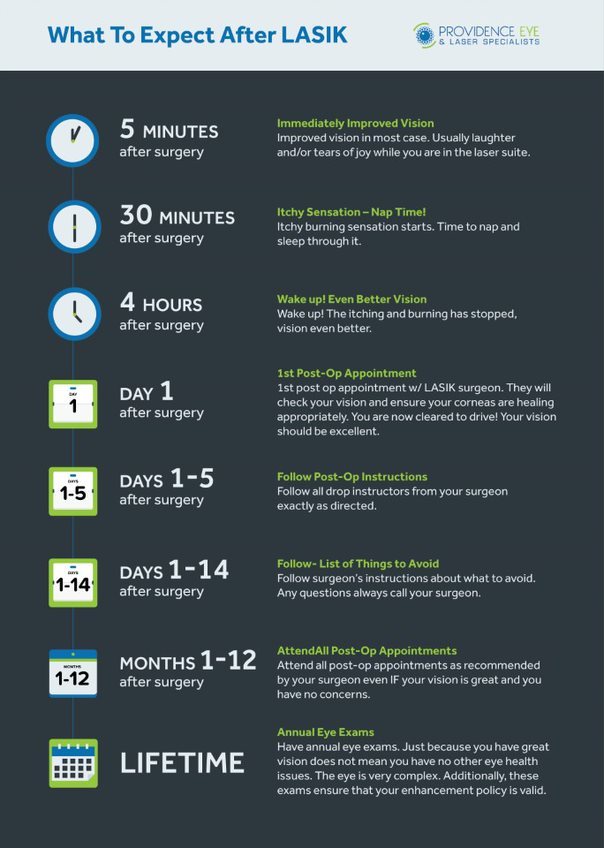
The flap is just about fully sealed A day after the procedure, lighttomoderate forces won’t move the flap In fact, it would take direct contact, like a makeup brush to the eye, to cause any serious problems for the newly created flap Full Recovery On the day after LASIK, most people can see the world with / vision (and sometimes, even better) While this isn’t. A 3 part series Healing is fairly quick, but there are many precautions that must be followed In terms of healing of the cornea, the Enhancements are always an option for the future While quite strong, the interface between the flap and the underlying Many precautions are recommended to. This ‘door’ is then closed, and your eyes quickly heal on their own.
The LASIK flap Healing process starts immediately once the flap is replaced by the LASIK surgeon after the laser treatment However, the healing process time will vary from person to person due to individual healing differences. Like LASIK, PRK can be used for nearsightedness, farsightedness, and astigmatism For PRK, the same computercontrolled excimer laser beam used to perform LASIK is used for the painless reshaping of the cornea This beam is so precise that it can remove 39 millionths of an inch of tissue at a time The PRK procedure takes just a few minutes. How Does Lasik Work?.
Eye surgeons report that the flap created on the surface of the cornea is often the main source of vision problems following LASIK surgery Though these complications are rare, healing problems, scarring, or unhealed and unsecured corneal flaps are often what cause poor LASIK outcomes. How Does Lasik Work?. It does not rely on the large myofibroblast 8 cells, which are reported to cause postsurgical corneal scarring and corneal haze Although LASIK is a routine procedure and usually causes only minimal inflammation, deficiencies such as an epithelial defect, lamellar keratitis, or flap folds may hinder the healing process on rare occasions.
.jpg)
Epithelial Ingrowth Lasikcomplications Com

21 Guide Does The Corneal Flap Heal After Lasik Eye Center Of Texas
.jpg)
Lasik Flap Dislocation The Flap Never Heals
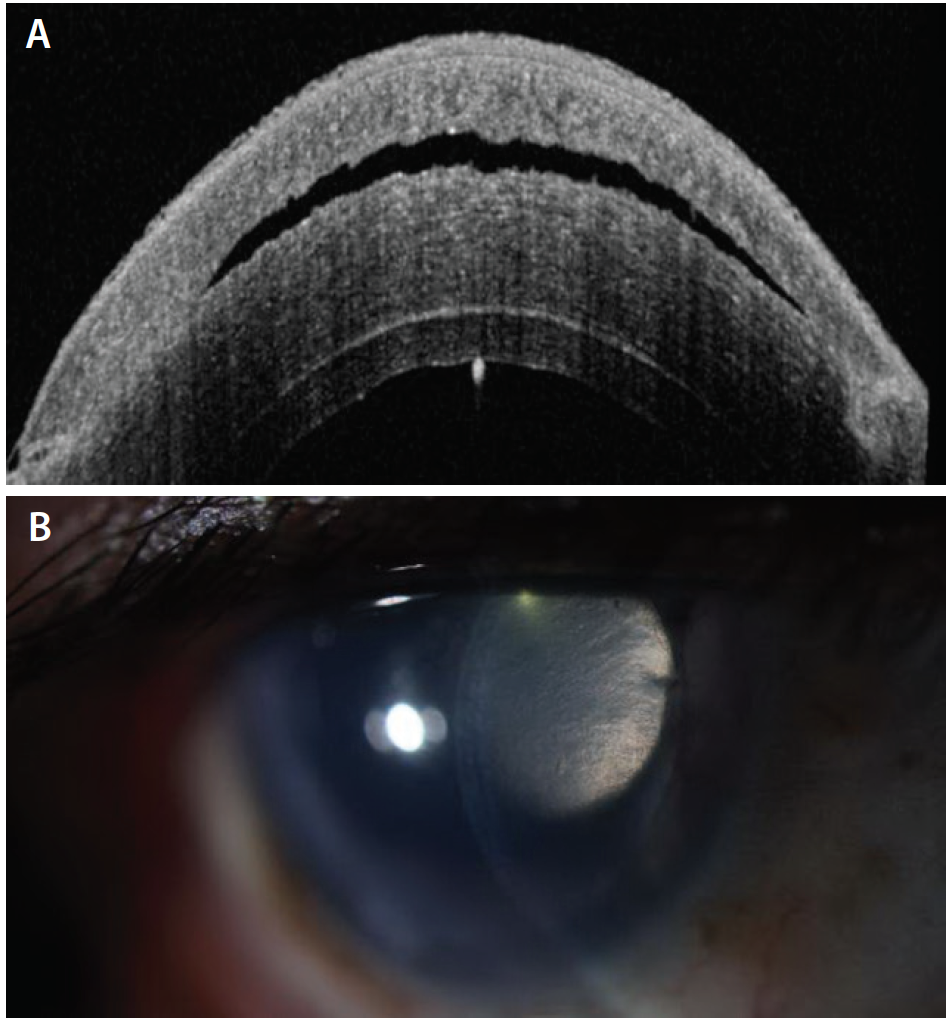
Crstoday Persistent Lasik Flap Interface Fluid After Dsaek Procedure
Q Tbn And9gcsuqogvtezopkkbaabxhlouhhh4fbcqyb9wrltk7rogroagnb8g Usqp Cau
Considering Lasik After Radial Keratotomy
Q Tbn And9gcshtyuccybv7vvdxez Ahnisn859qjvndgqzikuakcruwalyzpf Usqp Cau
Prk Vs Lasik Differences Pros Cons And What To Expect

How Does Lasik Work Everything You Need To Know About Lasik Eye Surgery
Treating Epithelial Ingrowth After Lasik

Full Text Traumatic Corneal Flap Displacement After Laser In Situ Keratomileusis Imcrj

Lasik Harvard Health
How To Manage Vision Changes Over Time Post Lasik Optometry Times

Eyeworld Bad Memories Of Flap Complications

Epithelial Ingrowth Following Laser In Situ Keratomileusis Lasik Prevalence Risk Factors Management And Visual Outcomes Bmj Open Ophthalmology
/LASIK-flap-never-heals.jpg)
Lasik Risks Lasik Side Effects Lasik Problems And Complications
Epithelial Ingrowth Under Lasik Flap
When Routine Eye Surgery Leads To Debilitating Pain Wsj

Pdf Corneal Regeneration After Laser In Situ Keratomileusis Wound Healing Process And Visual Outcomes Semantic Scholar
香港激光矯視中心
Lasik Prk Grosinger Spigelman Grey
Q Tbn And9gcs7ligxsexqrccrqe0agwsttwsj67egyvhguue35vutunvq1wav Usqp Cau
Sa1s3 Patientpop Com Assets Docs 374 Pdf
How Does The Eye Flap Heal In Lasik Eye Surgery Quora

Light Sensitivity After Lasik Detroit Mi Surgery Side Effects

A Clear Look At The Lasik Flap

Management Of A Traumatic Flap Dislocation Seven Years After Lasik

Full Text Traumatic Corneal Flap Displacement After Laser In Situ Keratomileusis Imcrj
.jpg)
Lasik Flap Dislocation The Flap Never Heals

Full Text Traumatic Corneal Flap Displacement After Laser In Situ Keratomileusis Imcrj
.jpg)
Lasik Flap Dislocation The Flap Never Heals
Lasik Guider Laser Vision Correction Guide Does The Lasik Flap Ever Heal Completely

Lasik Faq Washington D C Maryland Virginia Dr Holzman
Lasik Eye Surgery Mayo Clinic

The Epithelium Of The Flap Had Healed 2 Days Postoperatively Download Scientific Diagram
What To Expect After Lasik Faqs Recovery Time Providence Eye
/ectasia_flap_margin(425).jpg)
Lasik Flap Dislocation The Flap Never Heals

A Complete Guide To Lasik Eye Surgery Authorstream
The Epithelium Of The Flap Had Healed 2 Days Postoperatively Download Scientific Diagram
Common Post Lasik Care Mistakes And How To Avoid Them Stahl

Lasik Prk Grosinger Spigelman Grey

Lasik Eye Surgery Mayo Clinic
Understanding The Risk Of Lasik And Flap Complications

Late Post Traumatic Flap Dislocation And Macrostriae After Laser In Situ Keratomileusis Sinha R Shekhar H Tinwala S Gangar A Titiyal Js Oman J Ophthalmol
Lasik Honolulu Lasik Eye Surgery Honolulu Sugiki Portis Eye Hi
Lasik Laser Eye Surgery

6 Common Questions About Lasik Eye Surgery Penn Medicine

Lasik Laser Eye Surgery Fairfield Meriden New Haven Stamford Ct
Possible Flap Complications From Lasik Surgery North County Laser Eye Associates
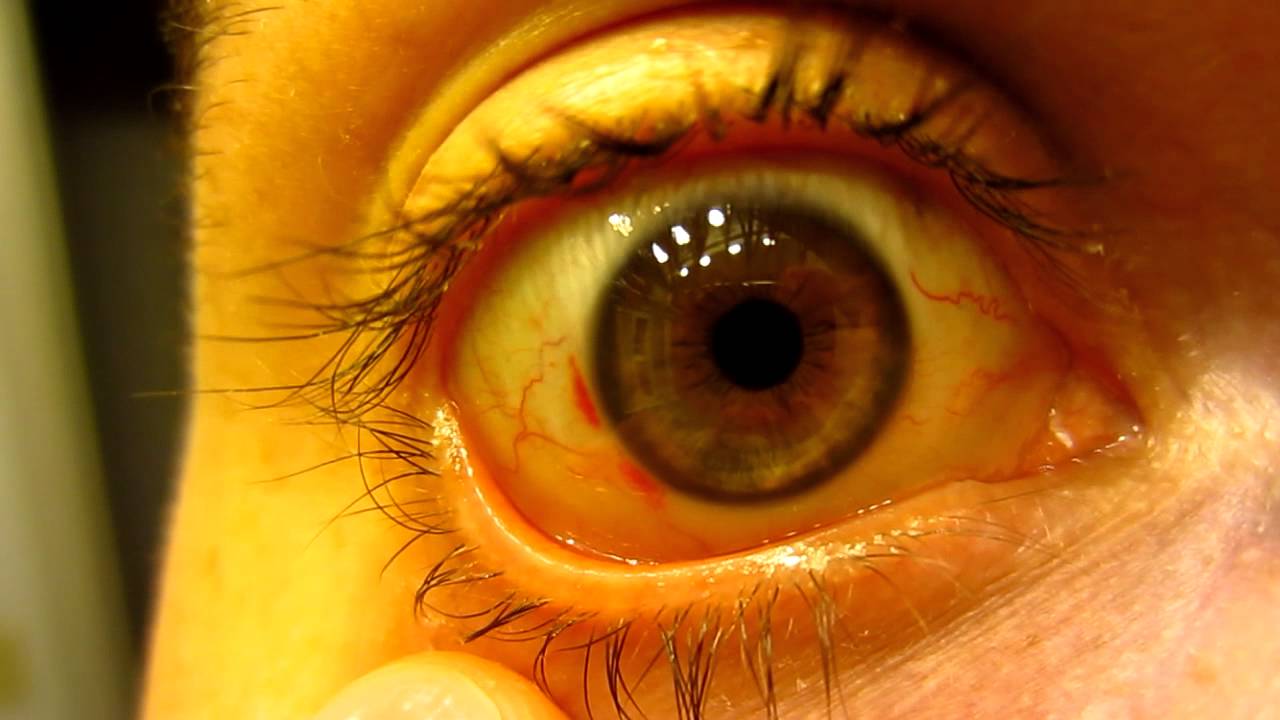
My Eye 6 Days After Lasik Eye Surgery Corneal Flap Healing Red Spots Fading Youtube

Recovery Time After Laser Eye Surgery What To Expect Dougherty Laser

What Does Lasik Eye Surgery Feel Like Optilase Laser Eye Surgery
To Anyone Considering Laser Eye Surgery By David Byttow Medium

Lasik Eye Surgery Guide Costs Benefits More Nvision

Healing After Lasik Lansing Owosso Rosenbaum Eye And Laser Center

Healing After Lasik Tidewater Eye Cheasapeke Virginia Beach Tidewater Eye

Lasik Know The Rewards And The Risks
/PRK%20Step%203.png)
Refractive Surgery Lasik
/flap_edge_dye(425).jpg)
Lasik Flap Dislocation The Flap Never Heals
Debunking Lasik Myths What S True What Isn T Nvision Eye Centers
/flap_edge(425).jpg)
Lasik Flap Dislocation The Flap Never Heals
Lasik Wikipedia
I Got Lasik Eye Surgery 4 Years Ago Business Insider
What Are The Differences Between Prk And Lasik Queens Ny

Lasik Vs Prk What The Lasik Doctor Doesn T Tell You Is This Your Homework
Why Lasik And Other Laser Eye Surgery Carries Risk Maybe Even Suicide

Healing After Lasik Tidewater Eye Cheasapeke Virginia Beach Tidewater Eye
Prk Vs Lasik Eye Care Associates

Lasik Eye Surgery For Vision Correction At Fort Worth Eye Associates
The Long Term Effects Of Lasik Good And Bad Nvision Eye Centers
Lasik Surgery Explained Definition Procedure Results
Lasik Flap Everything You Need To Know Iq Laser Vision

The Cut Made During My Laser Eye Surgery Leaves A Shadow In Bright Light Mildlyinteresting
Lasik How Long Does It Last

What If My Flap Moves After Lasik

Thickness And Immunohistochemistry Of Lasik Flaps Created By Different Femtosecond Lasers In Eye Bank Corneas
/detached-lasik-flap-2.jpg)
Lasik Flap Dislocation The Flap Never Heals

Case Study Enhancement 13 Years After Lasik Consult Qd

Lasik And Corneal Thickness Chicago Il

Eyeworld Management Of Rare Post Lasik Complications

Corrective Eye Surgery 1 Ziyi Kuek Skat3rgalz

The Difference Between Lasik And Prk Kraff Eye Institute

Eyeworld Bad Memories Of Flap Complications

Transprk Vs Lasik As Explained By A Surgeon Lee Hung Ming Eye Centre
Best Lasik Eye Surgery Washington Dc Dr Andrew Holzman
.jpg)
Lasik Flap Dislocation The Flap Never Heals
Lasek Eye Surgery A Better Choice Than Lasik Allaboutvision Com

Healing After Lasik Victoria Eye Center Victoria Beeville Cuero
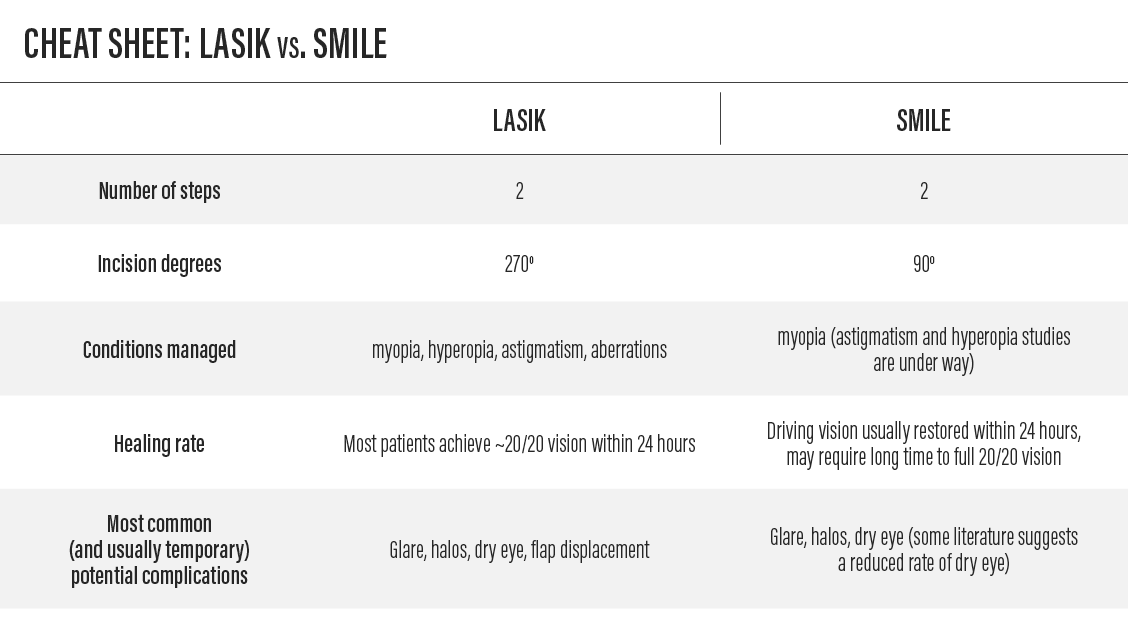
Smile And Lasik Three Major Differences Ods Must Know Collaborativeeye

Lasik Prk

Be Ready For These Surface Complications

Late Post Traumatic Flap Dislocation And Macrostriae After Laser In Situ Keratomileusis Sinha R Shekhar H Tinwala S Gangar A Titiyal Js Oman J Ophthalmol

Healing After Lasik Tidewater Eye Cheasapeke Virginia Beach Tidewater Eye

Eyeworld Bad Memories Of Flap Complications

Laser Refractive Surgery Lasik

Lasik Complications And Their Management Ento Key
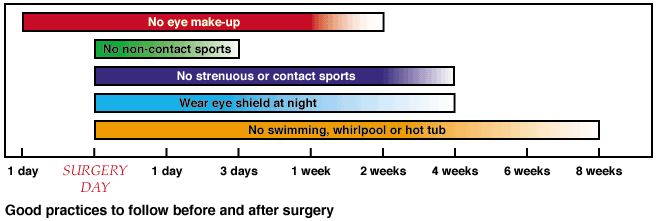
What Should I Expect Before During And After Surgery Fda


