Ought To Modal Verb
3
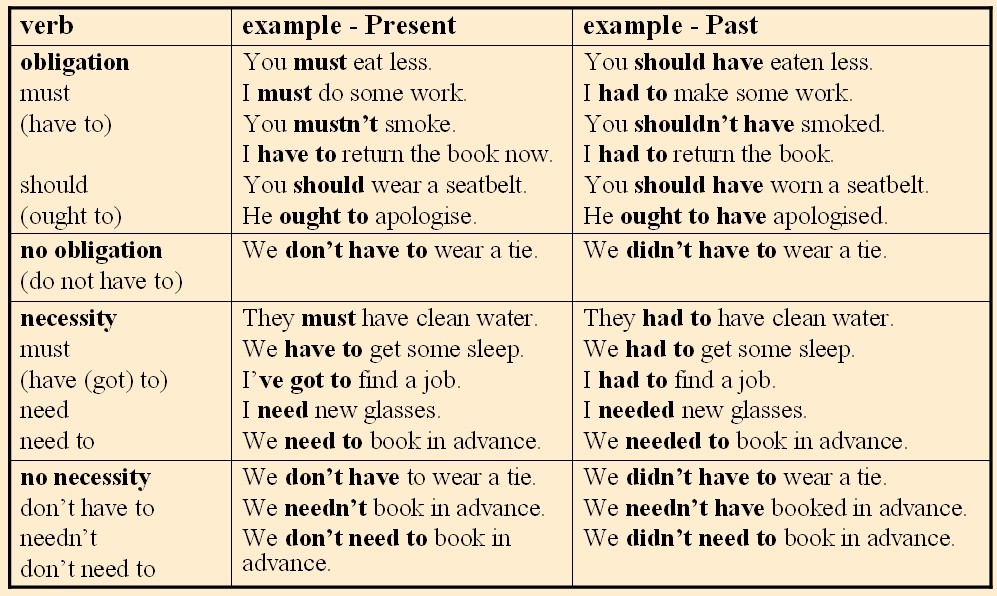
Obligation And Necessity Modal Verbs

Should Ought To Had Better Worksheet
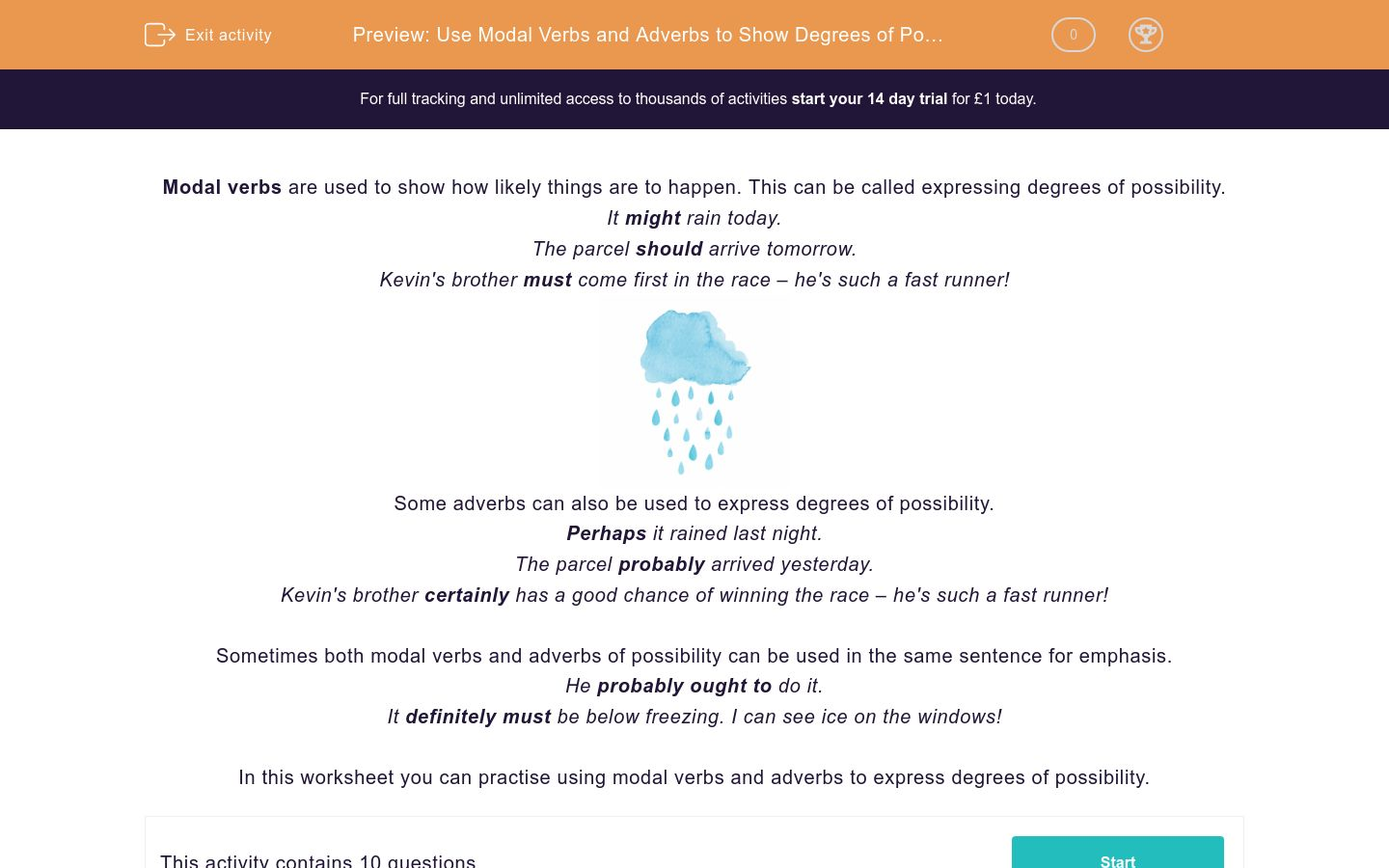
Use Modal Verbs And Adverbs To Show Degrees Of Possibility Worksheet Edplace
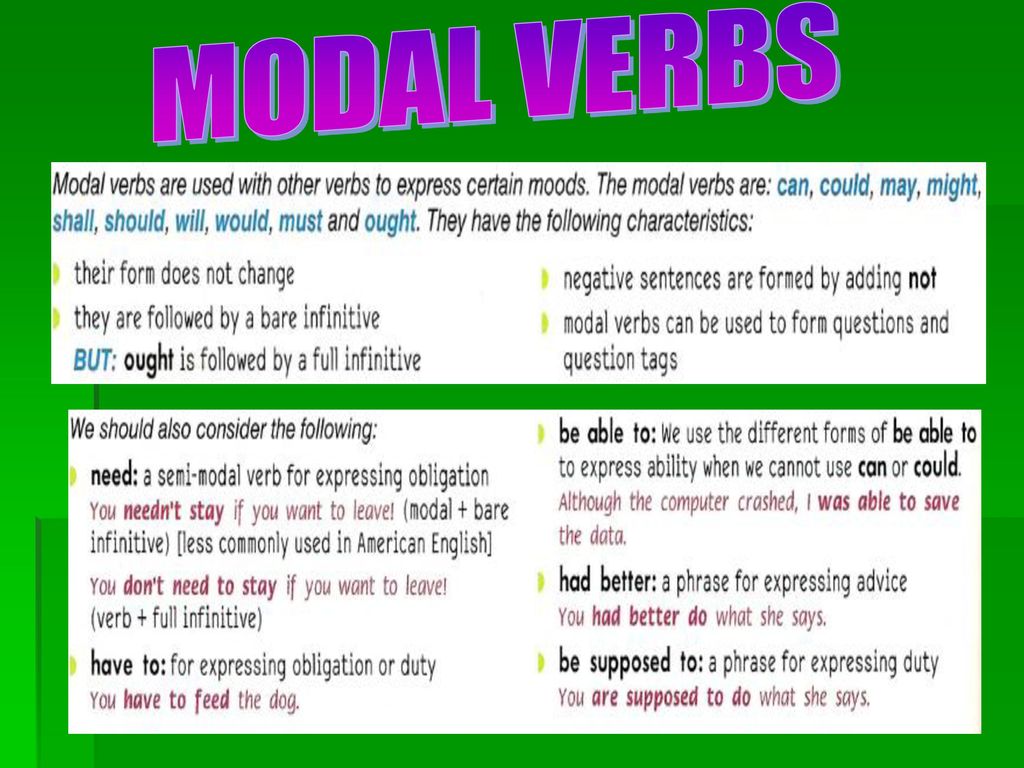
Modal Verbs Modal Verbs Uses Of Must And Its Opposites Ppt Download
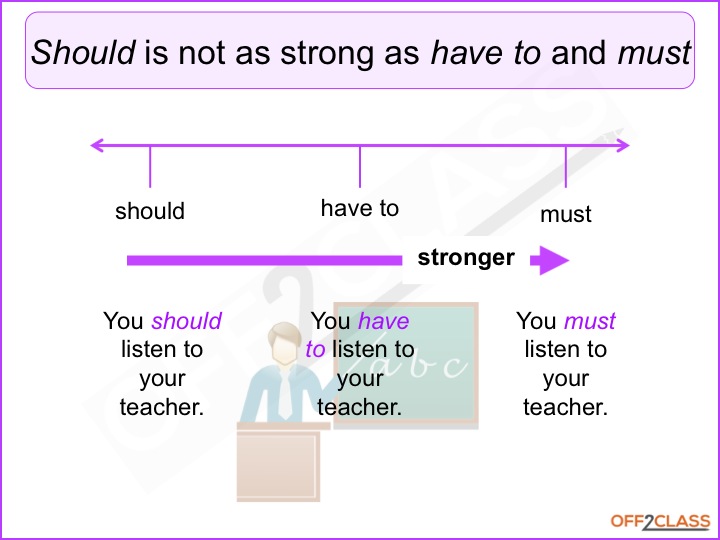
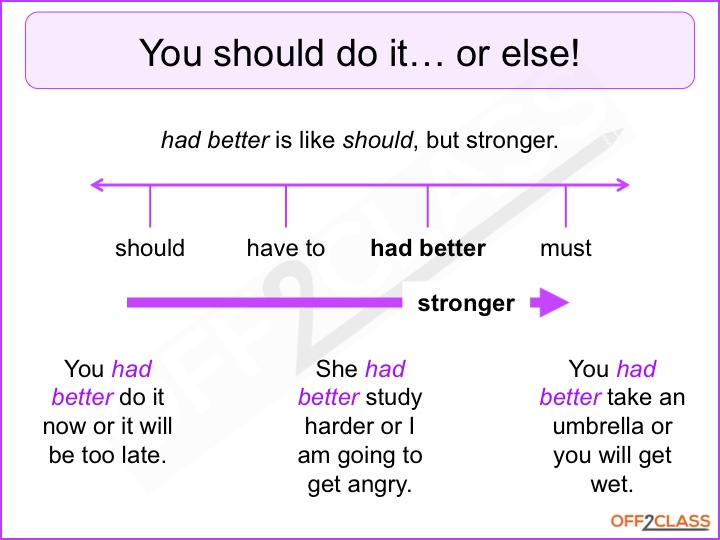
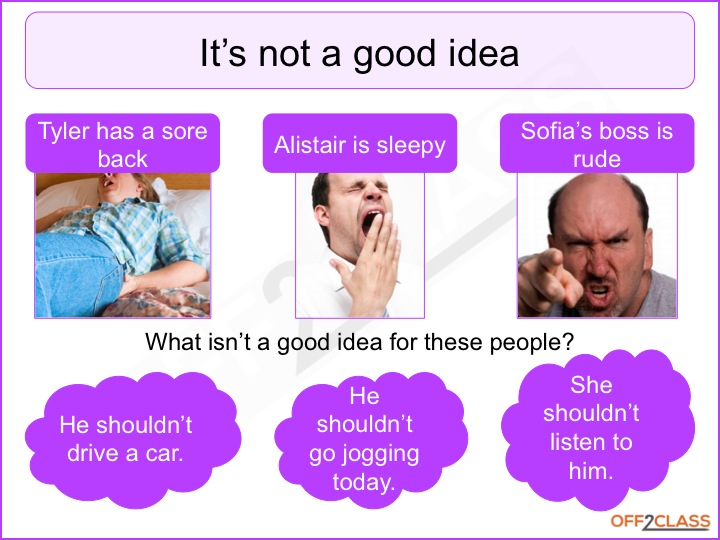
Teach Should And Ought To Advisability Modals Off2class
Ought is an auxiliary verb;.
Ought to modal verb. 1 used to say what is the right thing to do They ought to apologize “Should I write to say thank you?” “Yes, I think you ought (to)” They ought to have apologized (= but they didn't) Such things ought not to be allowed He oughtn't to have been driving so fast. English Common defectives The most commonly recognized defective verbs in English are auxiliary verbs—the class of preteritepresent verbs—can/could, may/might, shall/should, must, ought to, and will/would (would being a later historical development) Though these verbs were not originally defective, in most varieties of English today, they occur only in a modal auxiliary sense. Modal verbs are very common and useful in English We use them to talk about ability, permission, obligation, requests, offers, suggestions and moreTo give suggestions and advice we can use the modal verbs ‘could’, ‘should’, ‘ought to’, ‘had better’.
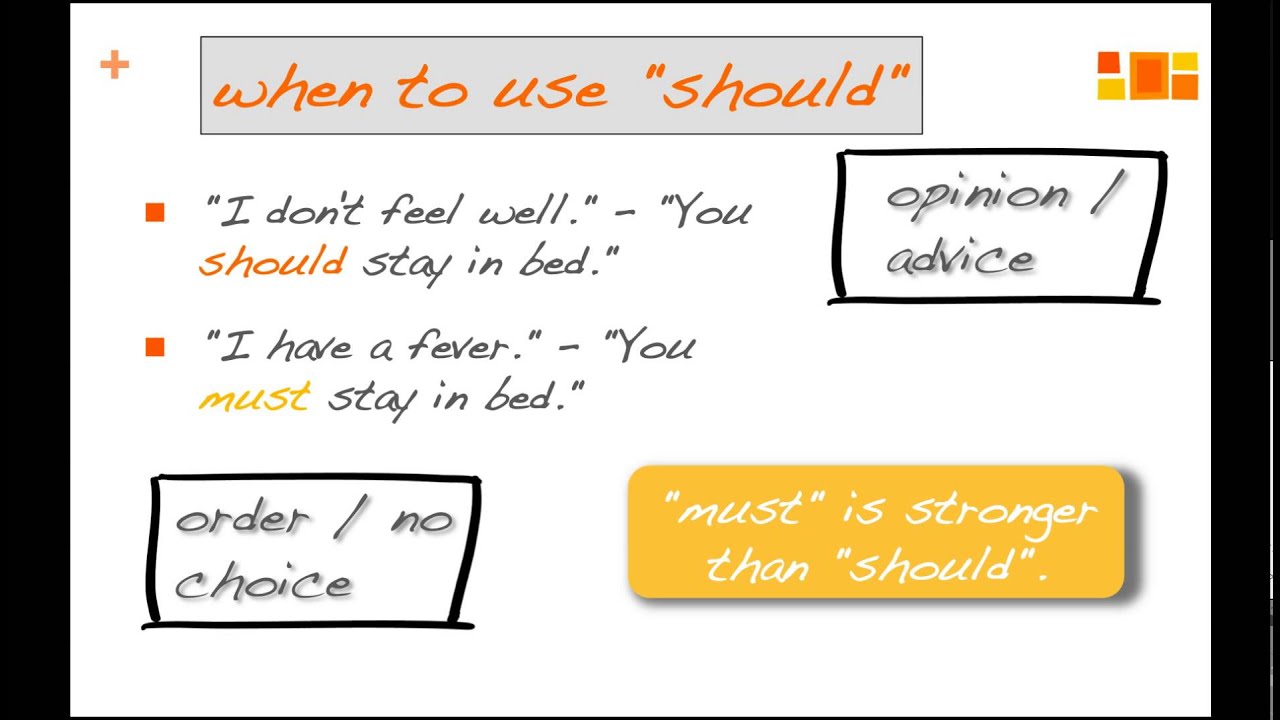
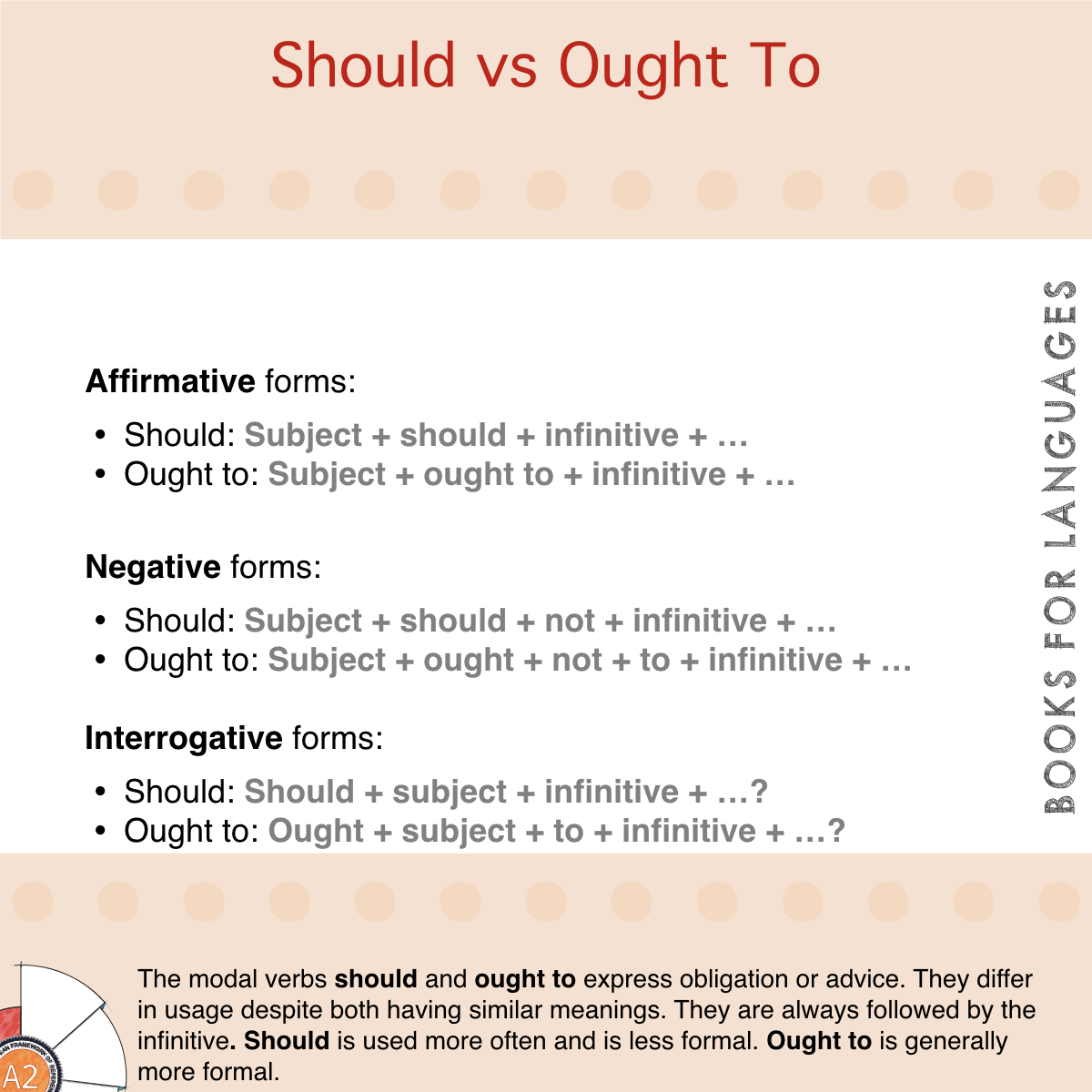
Must, have to, should and ought to There are two types of modal verbs of obligation ;. The modal verbs should and ought to express weaker obligation or advice They are always followed by the infinitive They differ in usage despite both having similar meanings Should is used more often and is less formal;. The answer is probably it’s not quite a modal verb Like ‘need’ and ‘dare’ Like modal verbs these peculiar vebs can be used with another verb (to tell you something about the possibility, necessity, etc of whatever the other verb deals with) How.
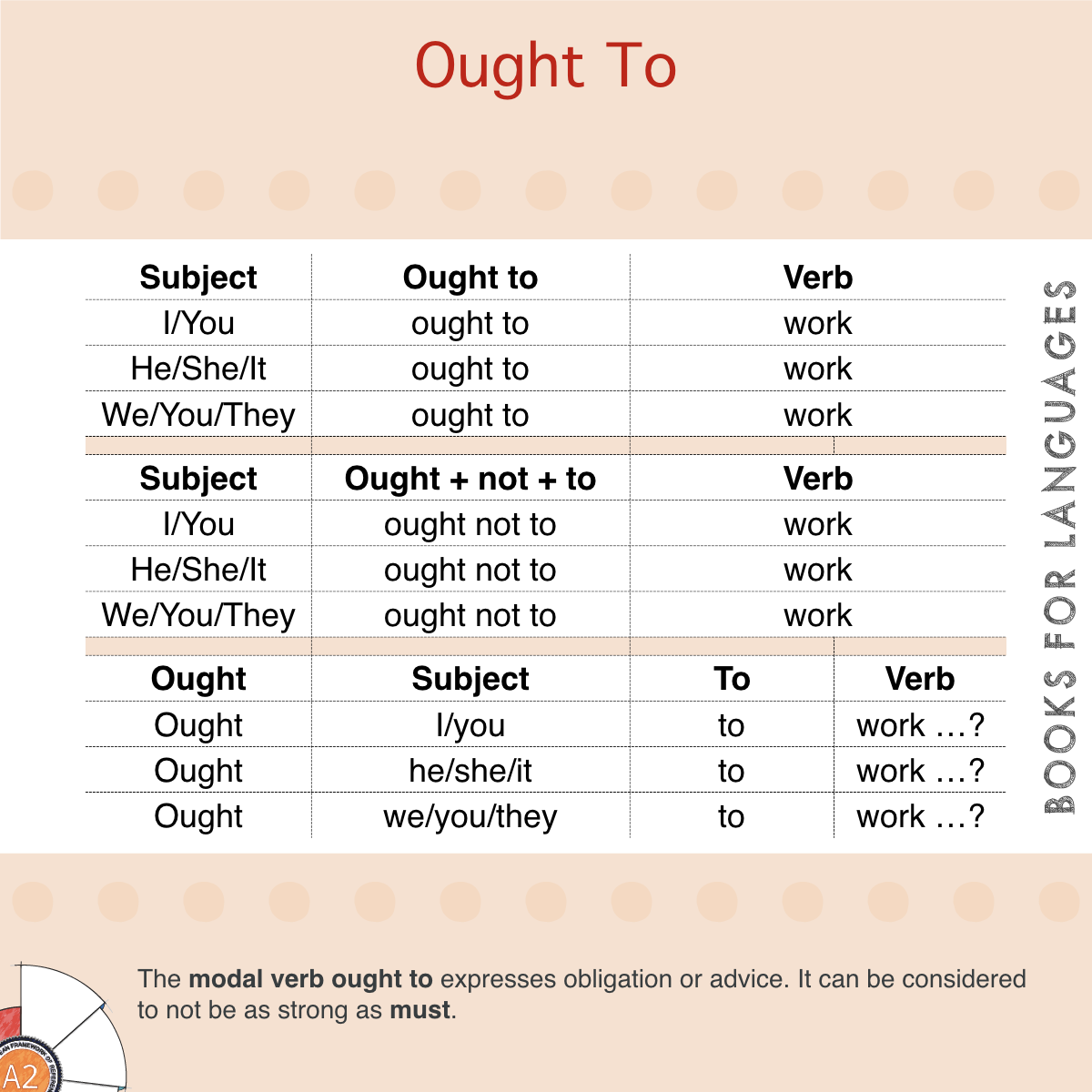
E Ought One other modal verb that we didn’t mention yet is the verb “ought” “Ought” is different than other modal verbs because it has to be followed by an infinitive An infinitive is a base verb with the word “to” in front of it Example 1 We ought to give Jessica a birthday present This example uses the modal verb “ought”. For example, it can be similar to the modal verbs “will” or “shall” in the following sentences I dare to dream I dare not say Dare I even look?. The modal verb ought to expresses weaker obligation or advice It can be considered to not be as strong as must We can use it in its different forms Affirmative We start with the subject followed by ought to and the verb Negative We start with the subject followed by ought not to and the verb Interrogative We start with ought followed by the subject and to and the verb (the sentence ends with a question mark).
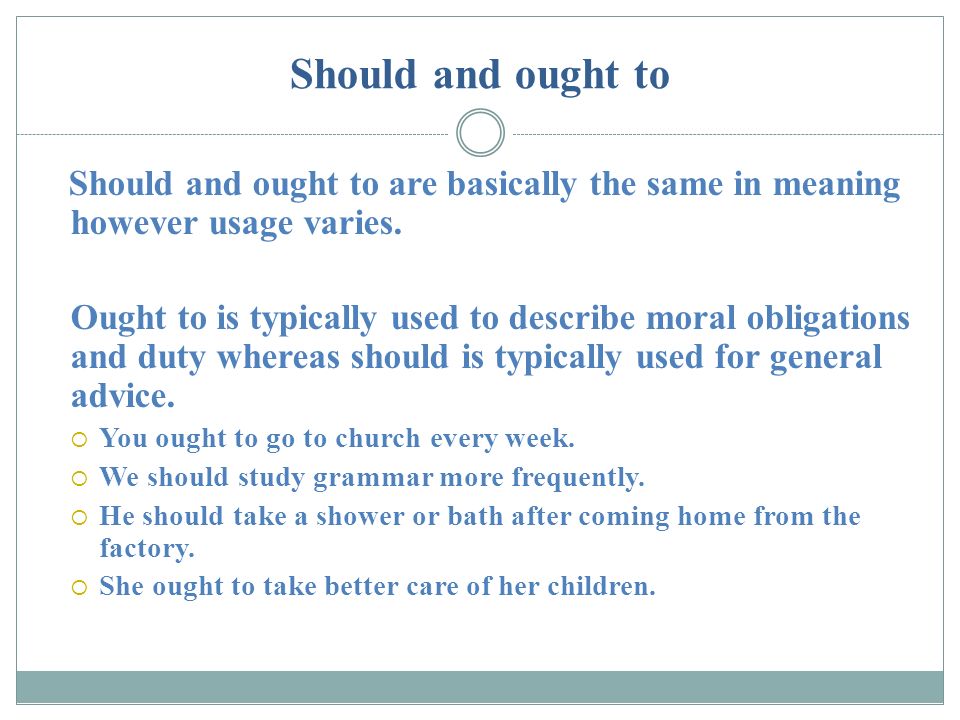
Should, ought to, and had better The Uses of should, ought to, and had better When indicating a probable event, should and ought to have similar meanings However, we can make use of the modal verb, should, or the semimodal, ought to to express certain meanings in the following ways 1 To express obligation or recommendation, as. Modal verbs are a type of auxiliary verb which express the mood of another verb They are used to express ideas such as possibility, prediction, speculation, deduction and necessity Modal verbs have the following characteristics 1) They do not have participle or infinitive forms 2) They do not take the ending (e)s in the thirdperson singular. Semimodal auxiliary verbs, often simply called semimodal verbs, are verbs that sometimes behave like modal auxiliary verbs SemiModal Auxiliary Verbs Which of the following is not one of the semimodal verbs?.
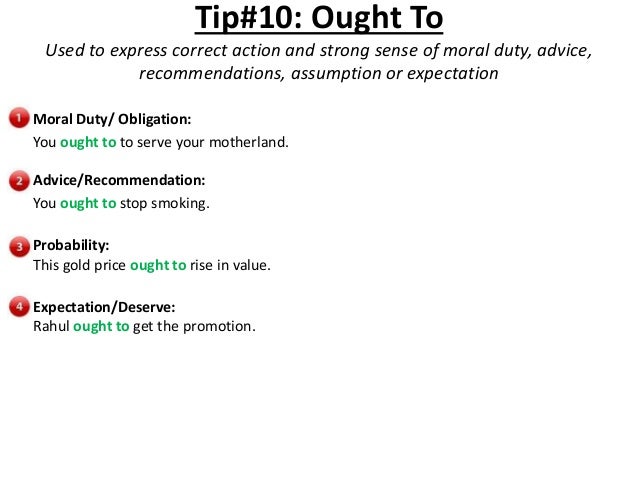
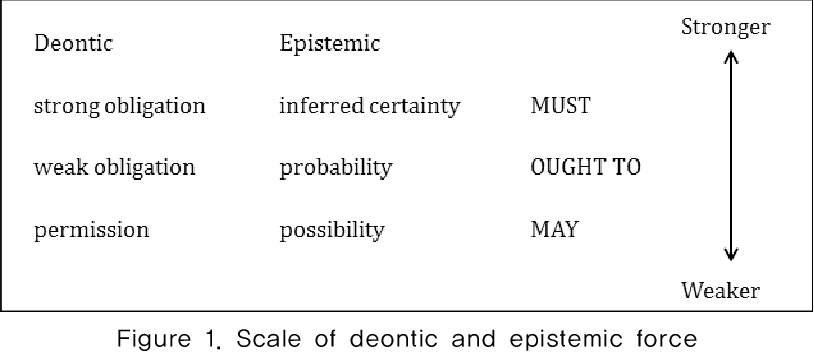
Verb ought to Indicating duty or obligation Indicating advisability or prudence Indicating desirability Indicating likelihood or probability Usage notes See ought for fuller examples and usage Many sources consider that ought to is the basic modal verb form. Those that primarily express a firm obligation or necessity must and have to those that express a recommendation or moral obligation should and ought to. It takes a following verb as its complement This following verb may appear either as a full infinitive (such as “to go”) or a bare infinitive (such as simple “go”), depending on region and speaker;.
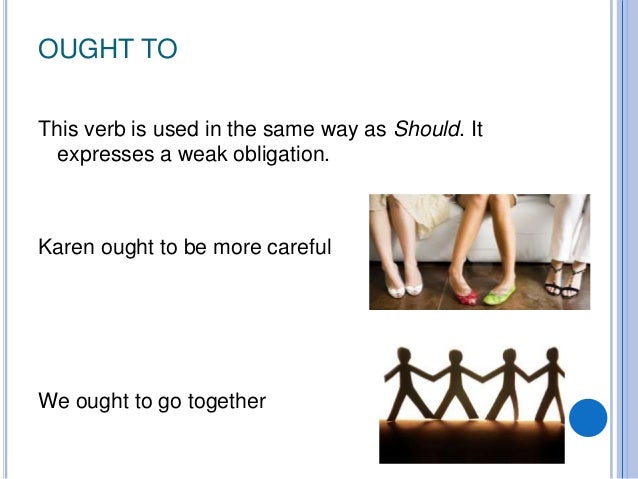
Ought to Posted by Manjusha Filed in English Grammar Ought is a modal auxiliary verb There is no s in the third person singular She ought to understand (NOT She oughts to ) Ought is different from other auxiliary verbs. English verb conjugation ought to negative to the masculine with a modal ought to Regular verb negative negatived negatived. The modal verbs should and ought to express weaker obligation or advice They are always followed by the infinitive They differ in usage despite both having similar meanings Should is used more often and is less formal;.
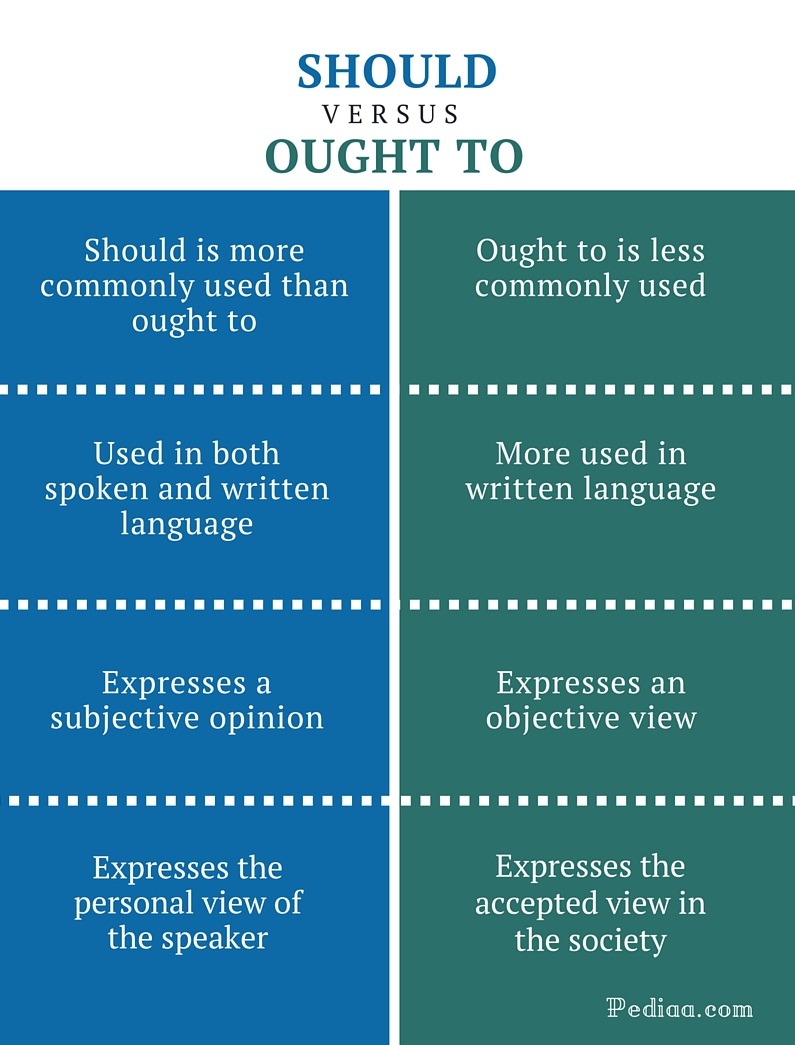
My clothes are dirty aI should / ought to wash them bI should to wash them cI ought washing them FORMS @ POSITIVE should simple form of a verb (no to) ought to simple form of a verb B Right or Wrong?. A) dare b) should c) ought to d) need 2 Which of the following is something that semimodal verbs cannot do?. Should and ought to are two different types of modal verbs in the English language Before focusing on these two modal verbs, it is important to comprehend what modal verbs are Modal verbs can be used to speak of possibility, probability, or even certainty It can also be used when making requests, asking for permission, or providing suggestions.
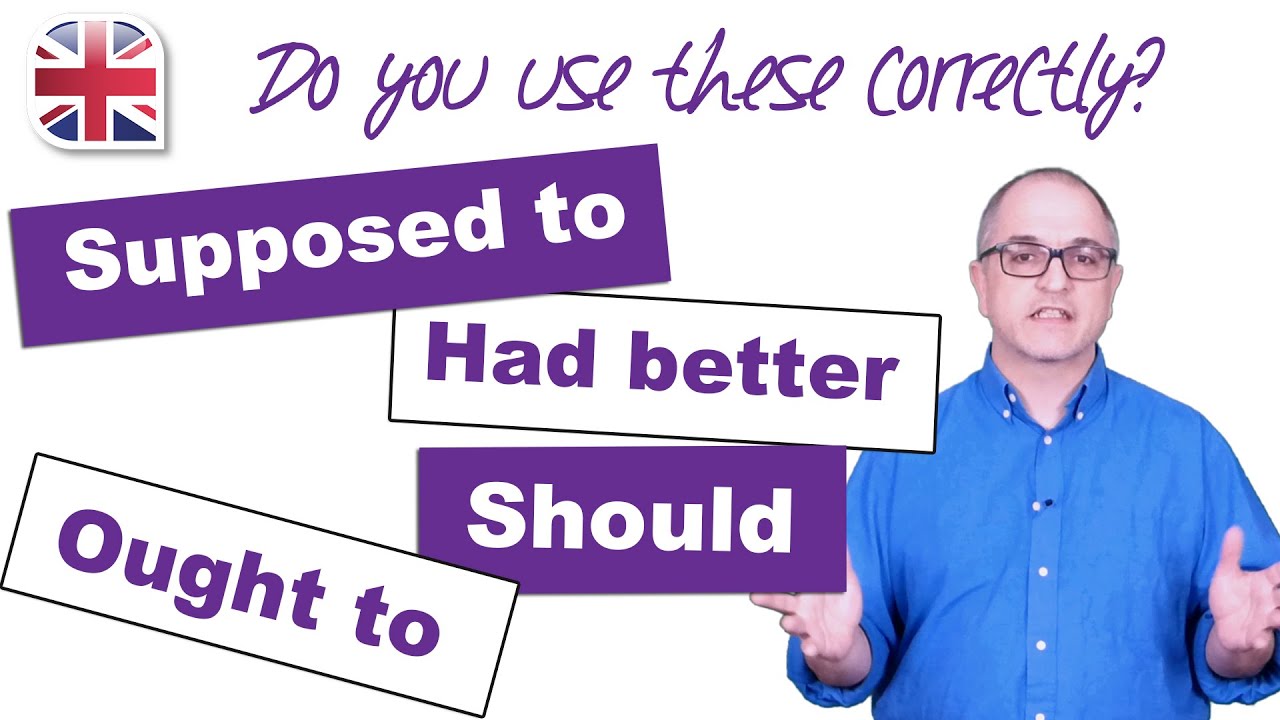
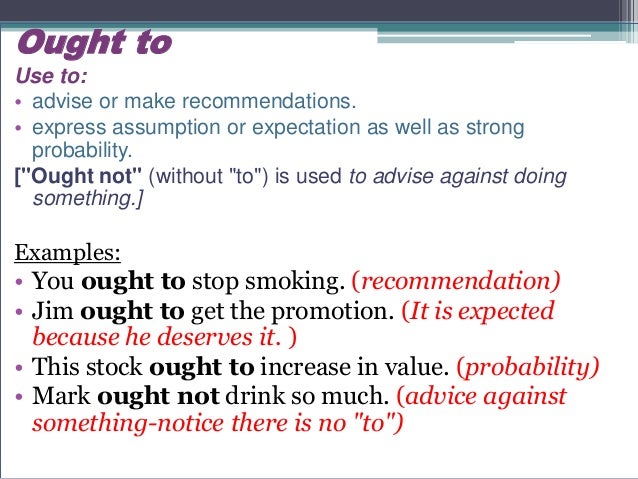
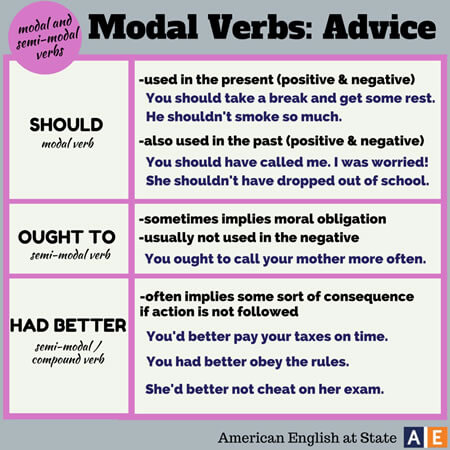
There are two phrasal modal verbs of advice, however, ought to and had better Ought to means the same as should Had better, though, is a bit stronger While ought to implies only advice, had better implies that something bad will happen if you don’t follow the advice Like the other phrasal modals, we use the same formula to make a statement. Advice Modal verbs don’t always have to make such strong sentences They can be used in softer ways as well They can be used in softer ways as well “Should,” “ought to” and “had better” are all good ways for giving advice. Exercise modal auxiliaries, should, ought to 2 Exercise on how to use should and ought to for strong probability Substitute the phrase underlined for the should / shouldn't or ought to / oughtn't to structures (both modals are possible in all answers even though there may be small differences in meaning).
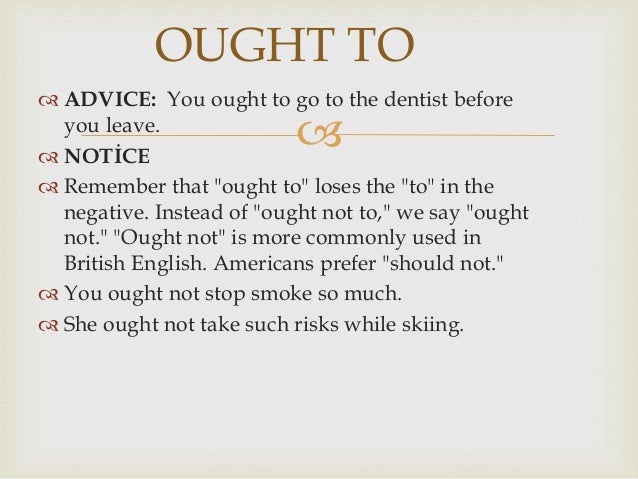
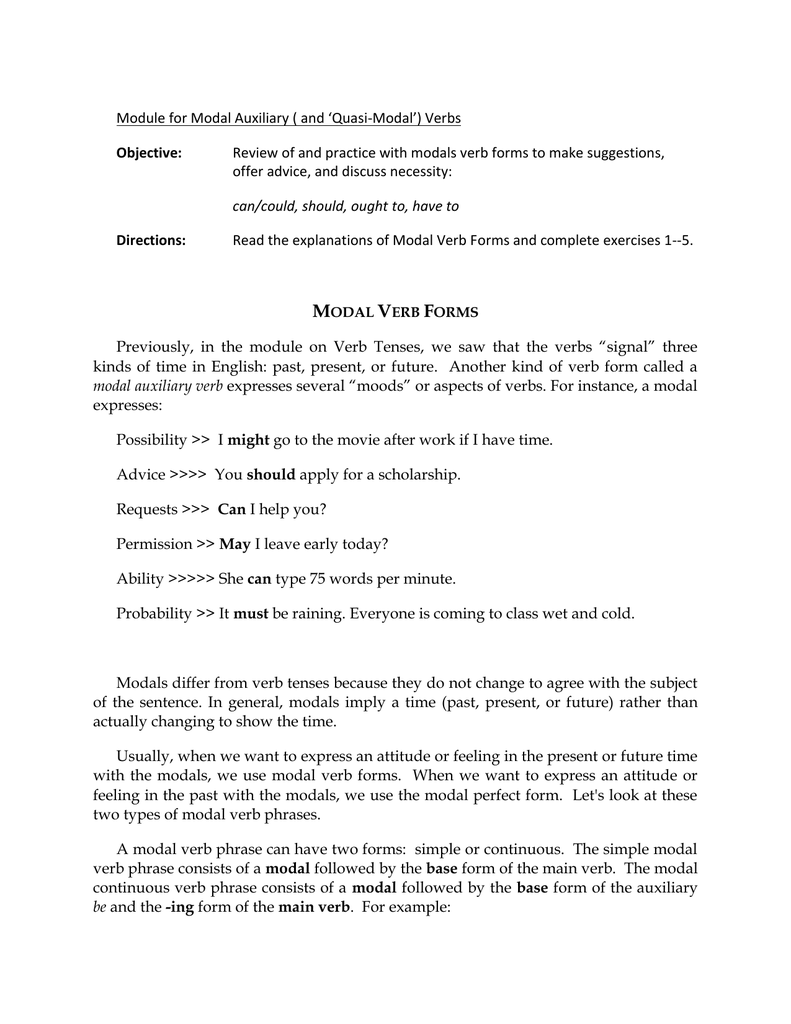
Note that ought to is often added to the list of modal auxiliary verbs COMMON MEANINGS OF MODAL AUXILIARY VERBS Modal auxiliary verbs are followed by the base form of a verb to show certainty, necessity, or possibility Modals and the verbs that follow do not change form to indicate tense or take an “s” ending All modal auxiliary verbs. The modal verbs in English grammar are can, could, may, might, must, need not, shall/will, should/ought to They express ability, permission, possibility, obligation etc Learn about the usage of modal verbs and their alternative forms in English grammar with Lingolia’s online lesson The put your knowledge to the test in the free interactive exercises. Using "Ought to" in Present, Past, and Future 1 Margaret ought not exercise too much It might cause injury 2 Margaret ought not have run the marathon She wasn't in good shape 3 Margaret ought not stay at home in front of the TV She should go to the fitness center with us.
These verbs are all modal verbs, which means that they are generally used in combination with other verbs, and are used to change the verb's meaning to something different from simple fact Modals express possibility, ability, prediction, permission, and necessity "Ought" is probably the simplest of this set of modal verbs. The modal verbs in English grammar are c an, could, may, might, must, need not, shall/will, should/ought to They express things like ability, permission, possibility, obligation etc Modal verbs only have one form They do not take s in the simple present and they do not have a past simple or past participle form. English speakers use the modal verbs “should,” “ought to” and “had better” to express that they think something is a good (or a bad) idea “Should” is the most common way to give advice Look at these examples These examples have the same basic advice message, but “had better” is a bit stronger.
Should, ought to, and had better The Uses of should, ought to, and had better When indicating a probable event, should and ought to have similar meanings However, we can make use of the modal verb, should, or the semimodal, ought to to express certain meanings in the following ways 1 To express obligation or recommendation, as. Pengertian Modal Verb Modal verbs adalah kata kerja bantu (verb auxiliary) yang harus digunakan dengan kata kerja utama (verb ordinary) Fungsinya yaitu untuk menyampaikan kemungkinan, keharusan, saran, kemampuan, dan lainlain Baca juga Verb atau Kata Kerja Rumus Modal Verb 1 Kalimat Positif. The same range of meanings is possible in either case.
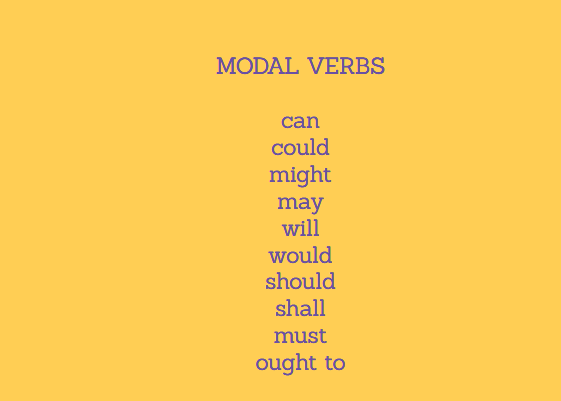
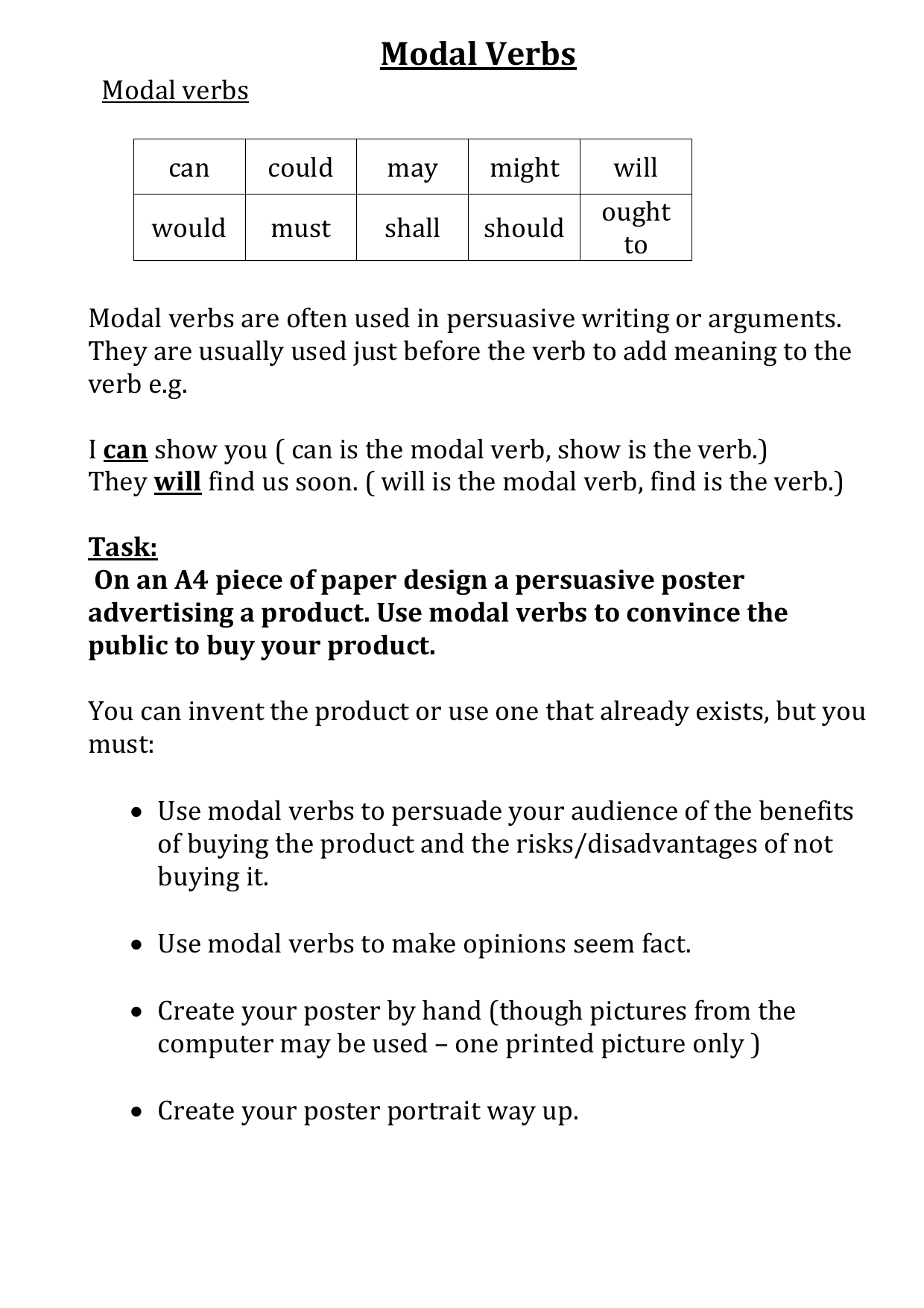
Rinki should to open a bank account soon. • Can • Could • May • Might They are Auxiliary verbs that provide additional and specific meaning to the main verb of the • Must sentence • Shall • Should • Ought to • Will • Would. Ought to is very uncommon in everyday use, especially in its negative and interrogative form, and is generally more formal;.
Ought to Posted by Manjusha Filed in English Grammar Ought is a modal auxiliary verb There is no s in the third person singular She ought to understand (NOT She oughts to ) Ought is different from other auxiliary verbs. Modal verbs are a necessary and important point of any language, so we thought that it would be a point worth (good use of time, important to) focusing on Below you can find further modal verbs, such as shall , should , ought to , must , have to , need to , will , and would. Modal verbs should, ought to, must and have to A modal verb is a type of verb that is used to express modality, such as advice, suggestion, obligation or need Read the following dialogue and pay attention to the different meanings expressed by using modal verbs.
Ought to and should Modal auxiliaries are helping verbs that connect with normal/ordinary verbs to express a meaning, ask a question or negate Modal auxiliaries are never used with the main auxiliaries;. Note that ought to is often added to the list of modal auxiliary verbs COMMON MEANINGS OF MODAL AUXILIARY VERBS Modal auxiliary verbs are followed by the base form of a verb to show certainty, necessity, or possibility Modals and the verbs that follow do not change form to indicate tense or take an “s” ending All modal auxiliary verbs. Ought to is mostly used with infinitive 'to' as it is a modal verb as well as semi Modal verb Look at the following sentences where 'ought' is used without 'to' Rinki should to open a bank account soon (Sentence is incorrect because 'to' is used after 'should') Ought you come out in this cold?.
Exercise modal auxiliaries, should, ought to 2 Exercise on how to use should and ought to for strong probability Substitute the phrase underlined for the should / shouldn't or ought to / oughtn't to structures (both modals are possible in all answers even though there may be small differences in meaning). The modal verbs of English are a small class of auxiliary verbs used to express possibility, obligation, advice, permission, ability, Modal verbs list in the English language Can, Could, May, Might, Will, Would, Must, Shall, Should, Ought to. What are modal verbs?.
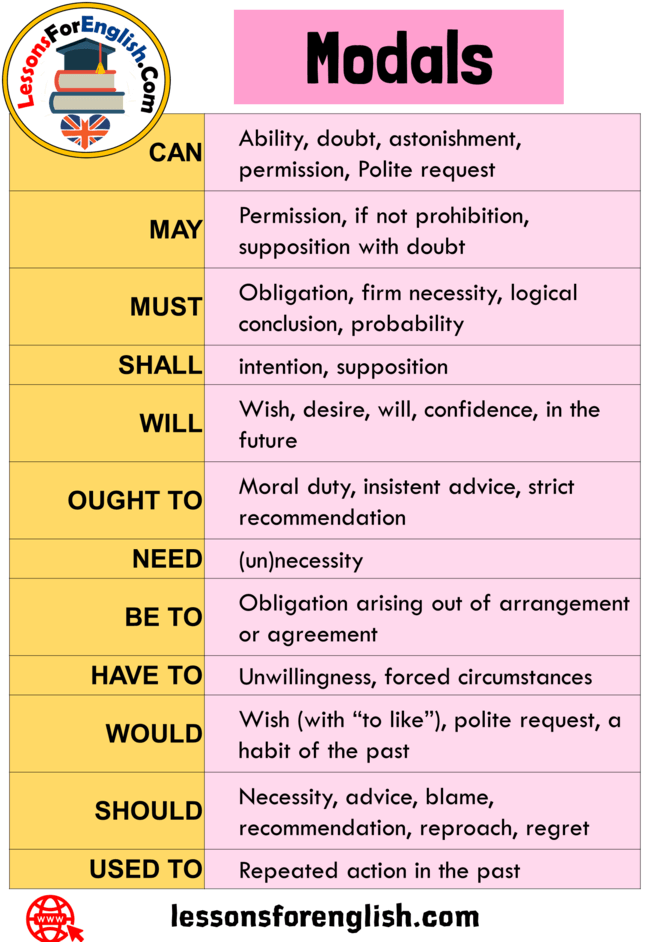
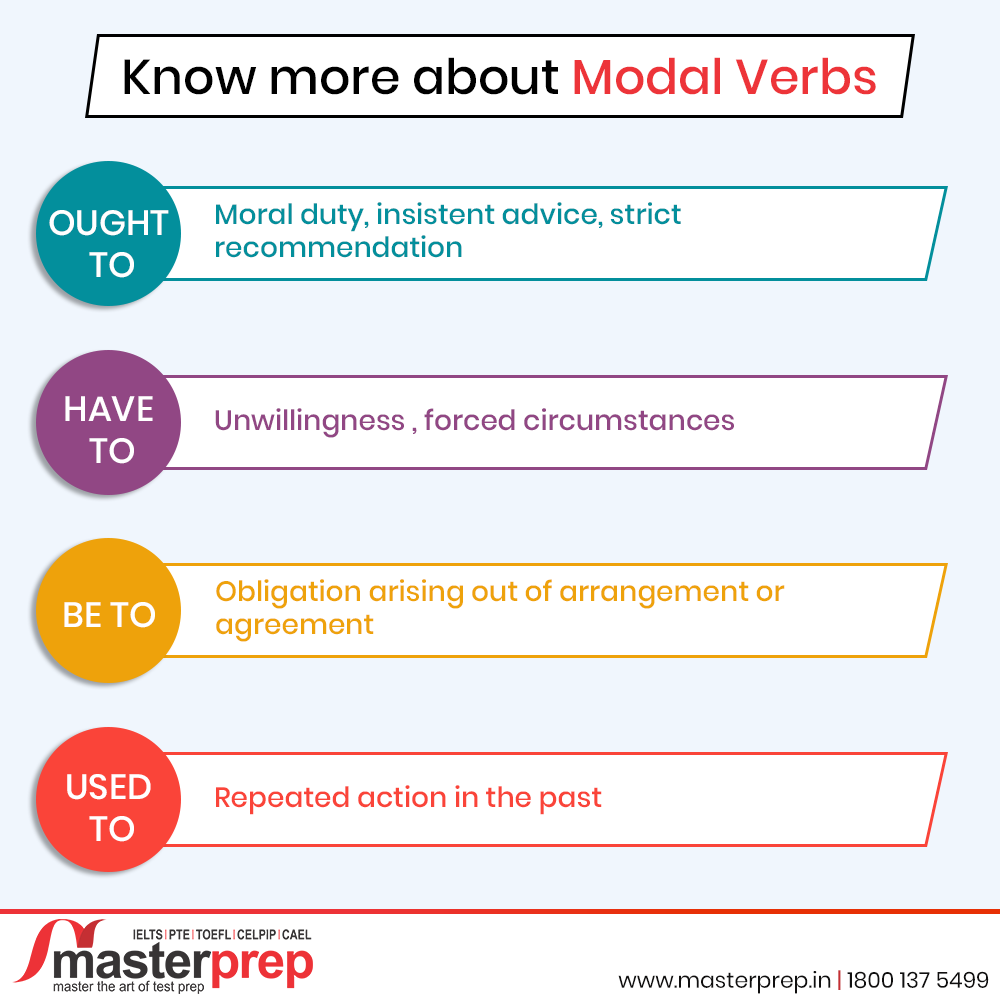
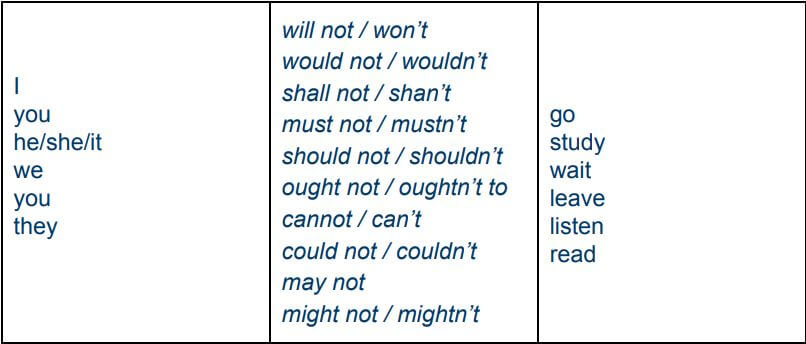
Modal Verbs Of Recommendation or Moral Obligation We use the modal verbs like must, should and ought to or equivalents words like have to, has to and will have to to say that it is necessary to do something These are called modal verbs of recommendation or moral obligation. The modal verbs of English are a small class of auxiliary verbs used to express possibility, obligation, advice, permission, ability, Modal verbs list the modals and modal phrases (semimodals) in English are. The verb ought is a modal verb and this means that, grammatically, it does not behave like ordinary verbs In particular, the negative is formed with the word not alone and not also with auxiliary verbs such as do or have Thus the standard construction for the negative is he ought not to have gone.
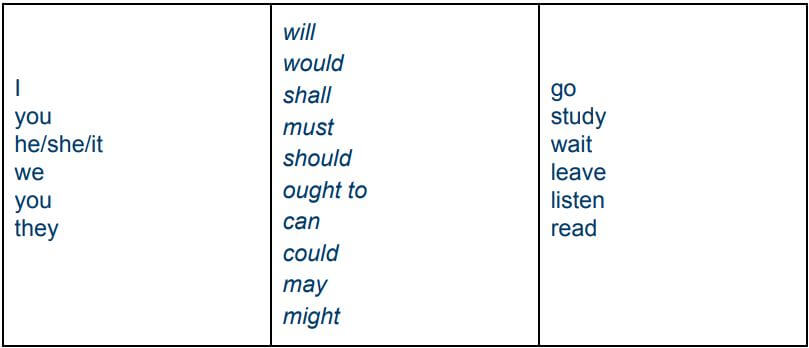
OUGHT TO es un verbo modal que, aunque su uso no es muy común, es importante conocerlo Así pues, en este artículo nos centraremos en este modal verb y en sus usos y significados OUGHT TO – Pronunciación /ɔːt ‘tu/ (vendría a ser como «óot tu») Este verbo modal, tiene el mismo significado que nuestro conocido should. Annabel ought to be here by now The journey ought to take about 2 hours Ought to have past participle of main verb is used to express regret that something was not done or to reproach someone for doing or not doing something I ought to have spoken up earlier I’m sorry You ought to have offered to help They ought to have told us what. Grammar Point modal verbs modal verbs The modal verbs are can, could, may, might, must, ought to, shall, should, will and would Dare, need, have to and used to also share some of the features of modal verbs Modal verbs have only one form They have no ing or ed forms and do not add s to the 3rd person singular form He can speak three languages.
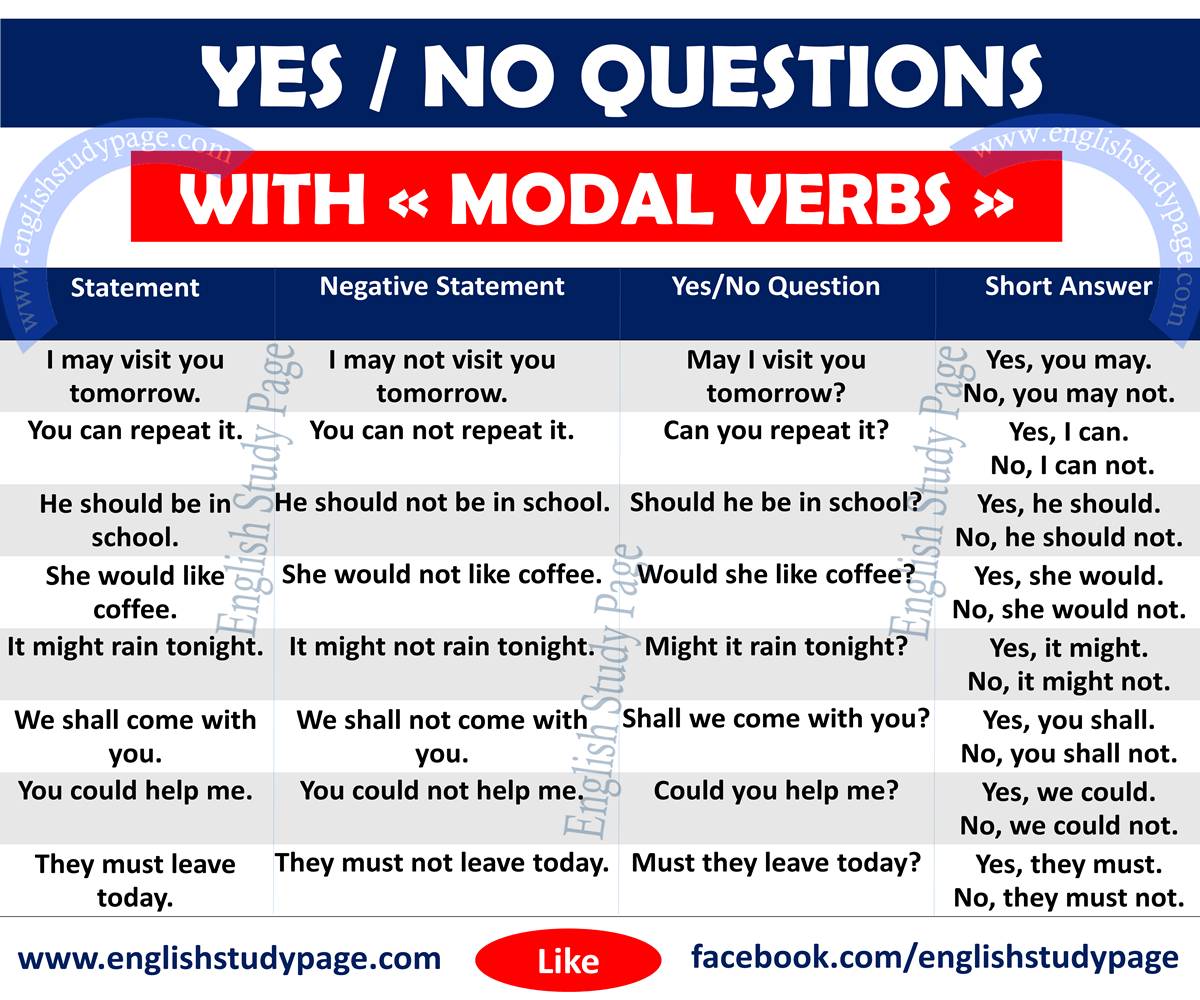
Modal verbs are types of auxiliary verbs which express necessity, ability, permission or possibility We also use them to make requests and offers The most common modal verbs are can, may and must Modal verbs don't have a past form (except can) and a past participle (3 rd form) You can only use them with the present tense. Ought to is mostly used with infinitive 'to' as it is a modal verb as well as semi Modal verb Look at the following sentences where 'ought' is used without 'to' Rinki should to open a bank account soon (Sentence is incorrect because 'to' is used after 'should') Ought you come out in this cold?. They have no s in the third person singular (he, she, it) She mights go to class She mights go to class Most modal verbs, except for ought, are followed by the verb without to Gallaudet should to build a new computer center Gallaudet should to build a new computer center Modal verbs have no.
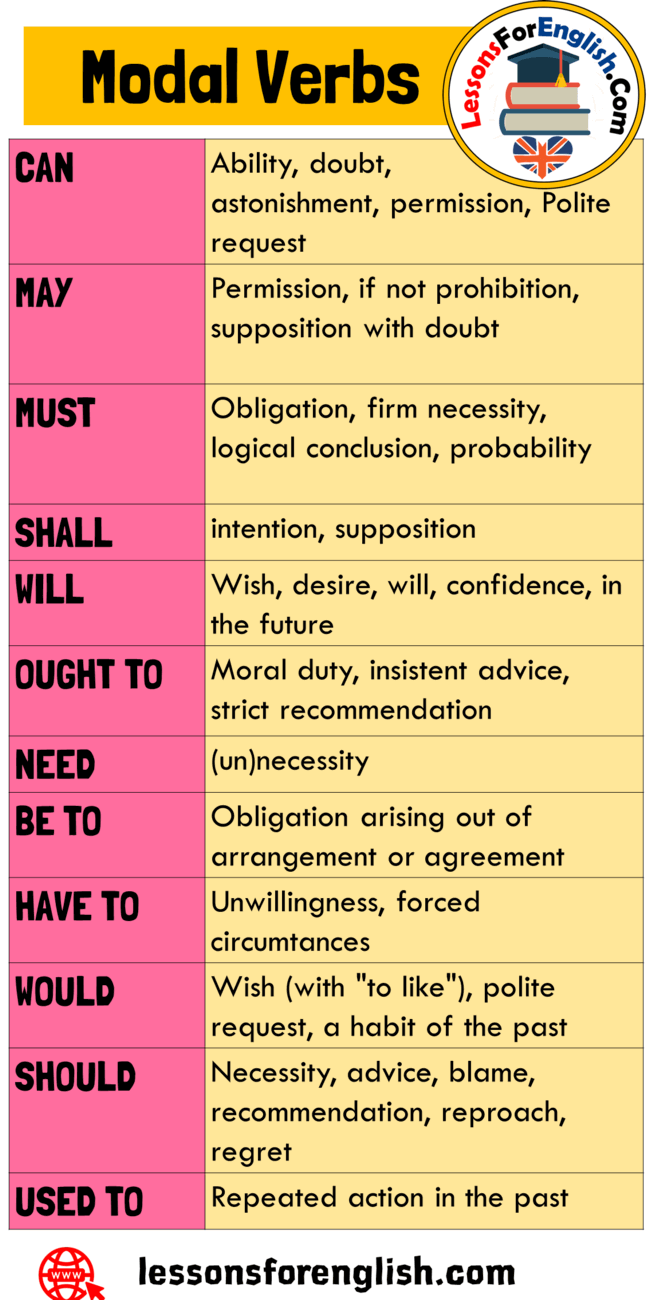
The verbs or expressions dare, ought to, had better, and need not behave like modal auxiliaries to a large extent and my be added to the above list Use of modal verbs Modal verbs are used to express functions such as Permission ;. The modal verbs of English are a small class of auxiliary verbs used to express possibility, obligation, advice, permission, ability, Modal verbs list in the English language Can, Could, May, Might, Will, Would, Must, Shall, Should, Ought to. Modal Verbs List of Modal Verbs What is a modal verb?.
Ought to is considered semimodal because, like used to, it ends in to and so makes verbs infinitive It is commonly compared to should because it expresses that something is viewed as correct, preferable, or necessary—or as probable, likely, or expected It can also be used to ask for or offer advice about something. I Expressing advice SHOULD and OUGHT TO C USE Should and ought to have the same meaning They mean “This is a good ideaThis is good advice" A Right or Wrong?. Used to say what has probably happened or is probably true If he started out at nine, he ought to be here by now That ought to be enough food for the four of us Grammar modal verbs The modal verbs are can, could, may, might, must, ought to, shall, should, will, and would.
The Verbs can, could, may, might, will, would, shall, should, must, ought to, need, dare are called Modal Verbs These are the supporting verbs that convey the ‘mode’ or ‘manner’ of the actions suggested by the main verbs They are used before ordinary verbs and express 1 Permission 2 Obligation 2 Ability 3 Possibility 4 Certainty 5 Necessity. Rinki should to open a bank account soon.

English Grammar Modal Verbs Globalexam Blog

Modal Verbs Useful Rules List And Examples In English Esl Grammar
Modal Verbs Must Need Dare Ought To Used To Youtube

Should Ought To And Had Better Other Ways To Give Advice Games To Learn English Games To Learn English
:max_bytes(150000):strip_icc()/Getty_modals2-185278342-57d74b183df78c5833a47220.jpg)
Definition And Examples Of A Modal In English

Modal Verbs An Introduction In Using Modal Verbs Main English
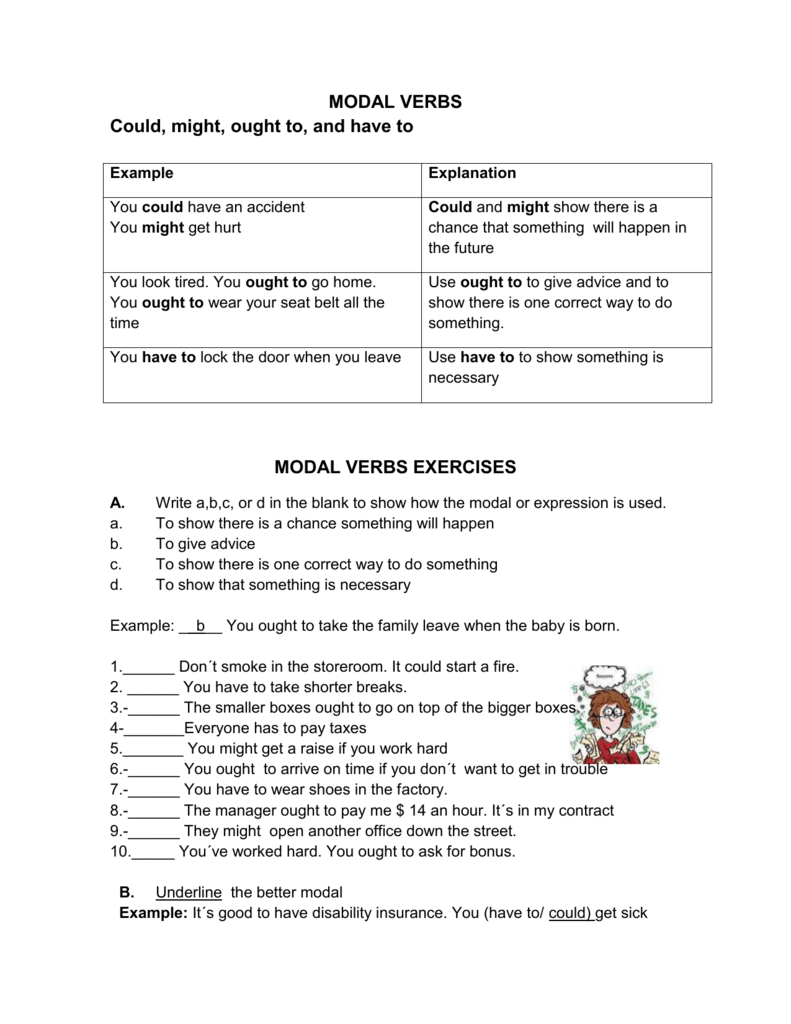
6 Modal Verbs
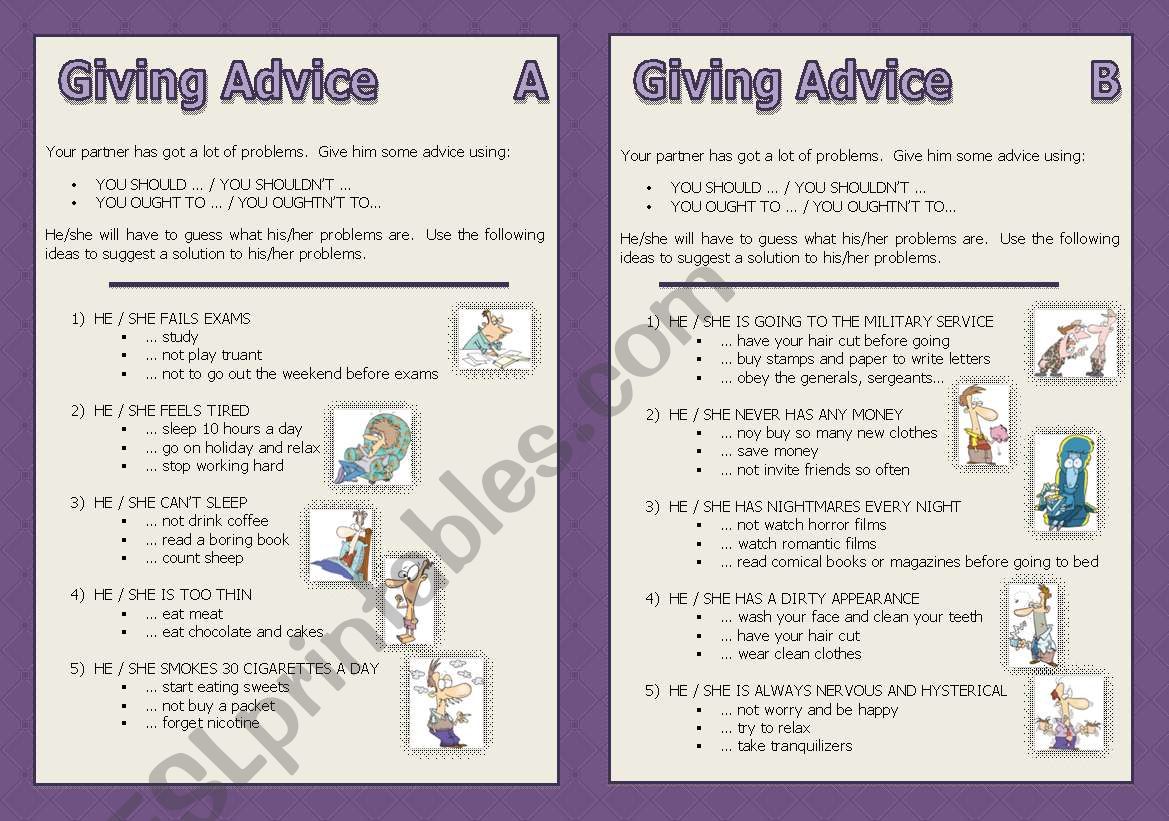
Modal Verbs Giving Advice Should N T Ought N T To Speaking Esl Worksheet By Nessita77
Teach Should And Ought To Advisability Modals Off2class
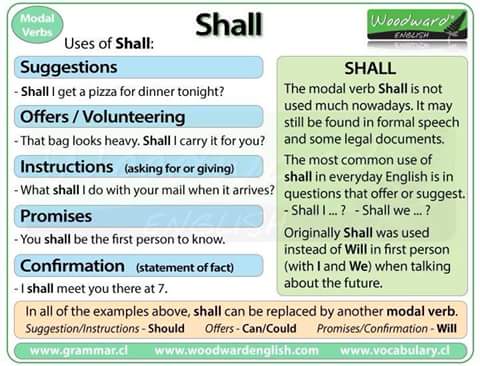
Click On Modal Verb Shall Should Ought To

Modal Verbs The Condiments Of English English Live Blog
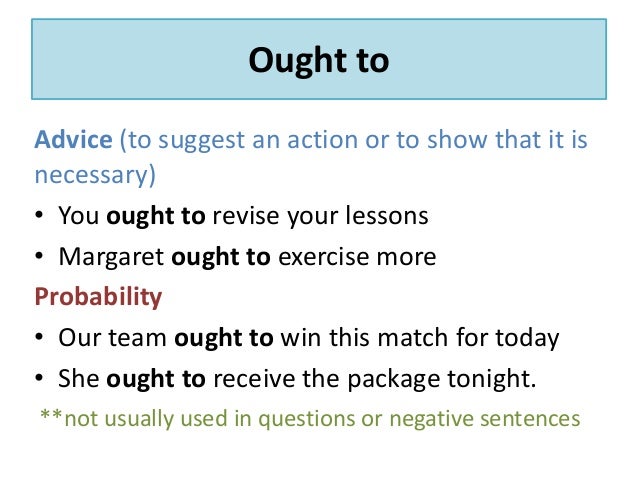
Modals Markesol
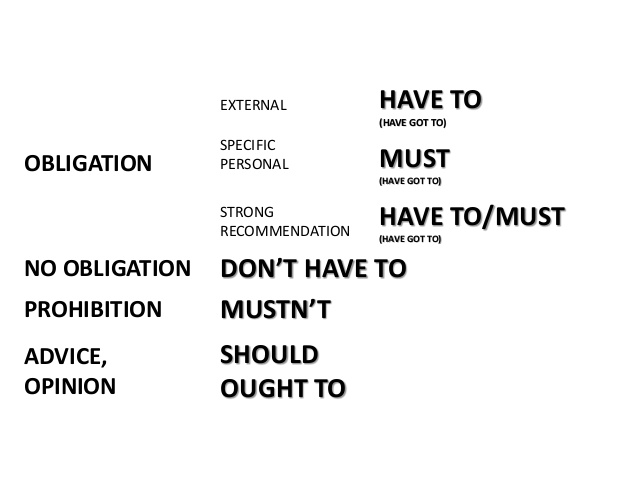
7a Advanced English Grammar Differences Between Must Have To Ought To Should Need Needn T Have

Modal And Semi Modal Verbs Materials For Learning English
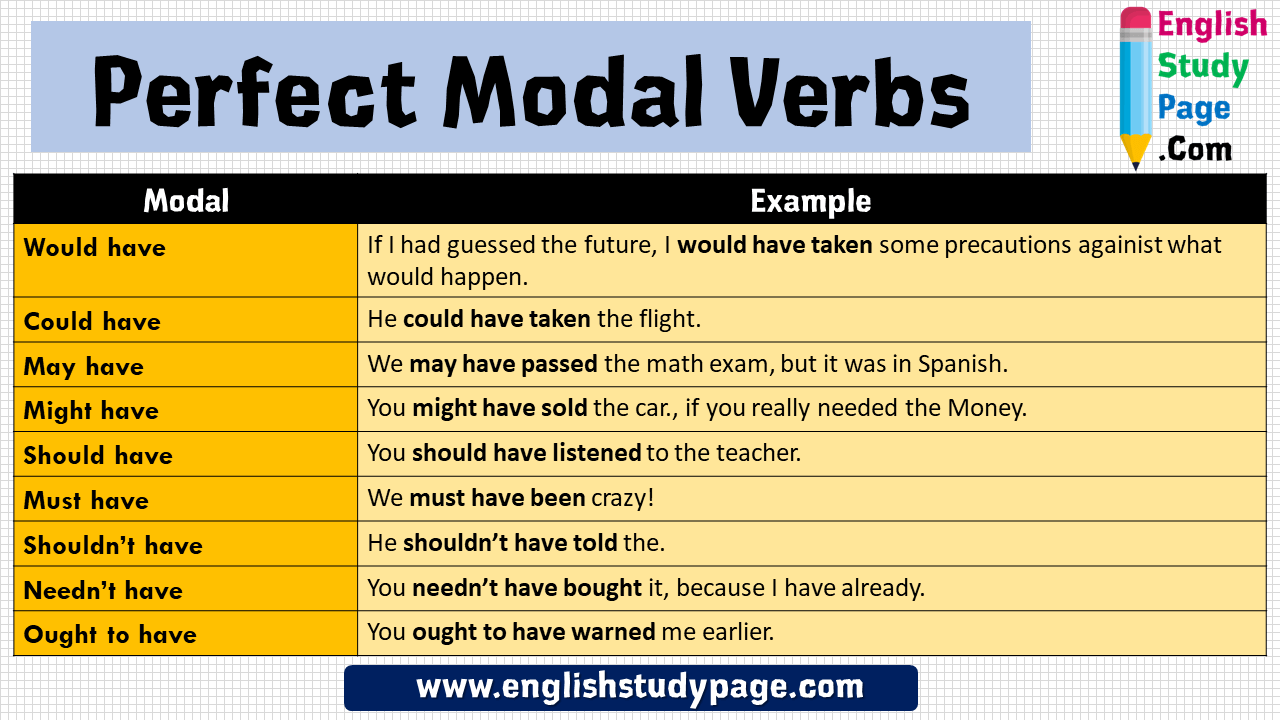
English Perfect Modal Verbs Example Sentences English Study Page
When To Use Should Ought To An English Grammar Video Youtube

Modal Verbs For Suggestion And Advice Grammartop Com
Ppt Unit 8 Modal Verbs Must Should Ought To Shall Will And Would Powerpoint Presentation Id

Modal Verbs Different Usage And Meanings A Handy Summary
Modal Verbs Funda Kocaoglu

Ought To क स र Concept और Use Modal Verb Ought To In English Grammar In Hindi Youtube
Difference Between Should And Ought To Meaning Usage With Examples
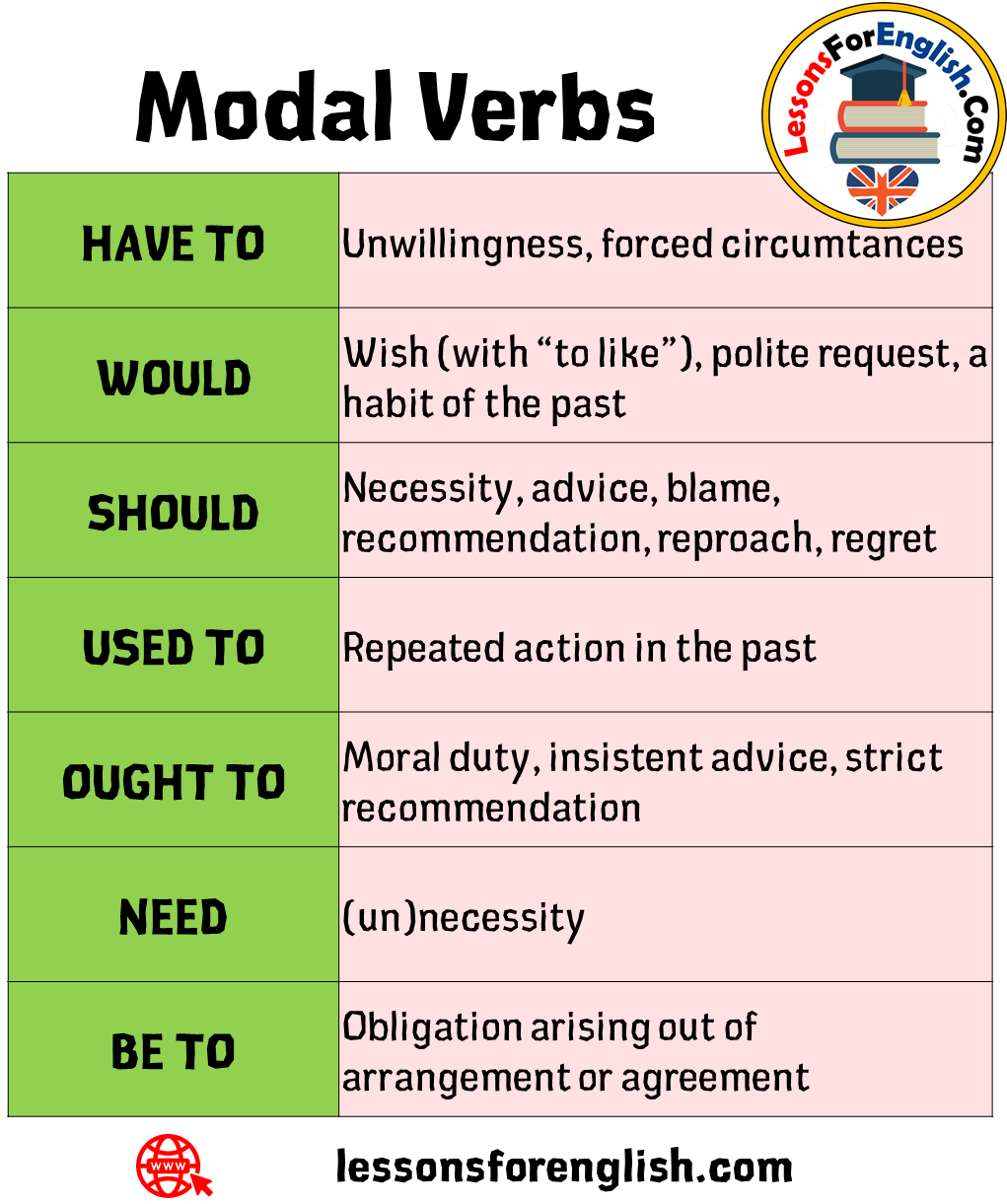
Modals Can May Must Shall Will Ought To Need Be To Have To Would Should Used To Lessons For English
What Are Modal Verbs English Made Simple

30 Modal Verbs Past Modals Ideas English Grammar Learn English English Lessons

Ought To Archives Lessons For English

You Ought To Learn How To Use Modals Correctly Markesol
Should Vs Ought To English Grammar Level

English Esl Ought To Worksheets Most Downloaded 19 Results

Modal Verbs Should Ought To Have To Y Must
Q Tbn And9gcqgthmc 5 Dskuken4rgkgil7tbhdmmkzl8cnslaoq06jbieixr Usqp Cau
Modal Verbs Modal Verbs

Using The Expression Ought To In English Modal Auxiliary Verb Learnex Free English Lessons

Modal Verbs English Page
Q Tbn And9gctwlylrbb9anc7zwfmjhetfabrbebofrmqrsddopvutncwbf8ip Usqp Cau
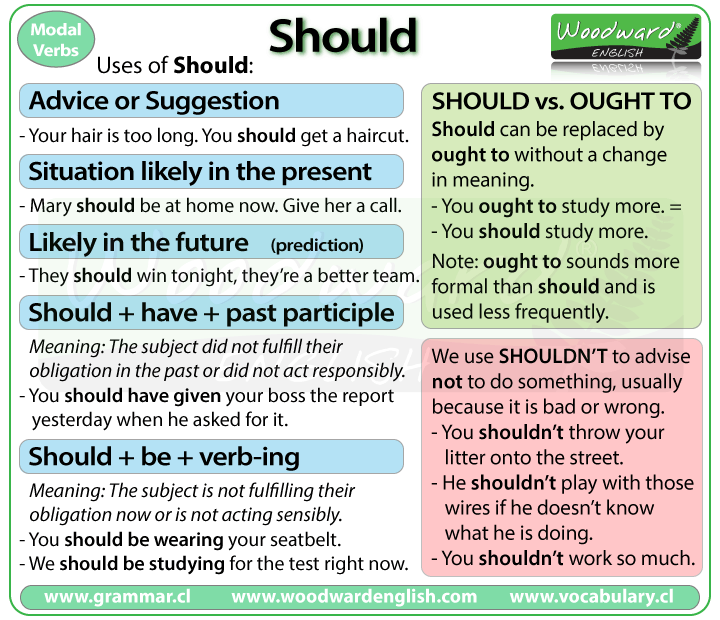
Should English Modal Verb Woodward English

Modal Verbs

Ought To Worksheet

You Can Use These Modal Verbs To Show Really Learn English Facebook

All Modal Verbs Plus Key Docx

Modal Verbs You Had Better Learn Veronica Jaurena Vk
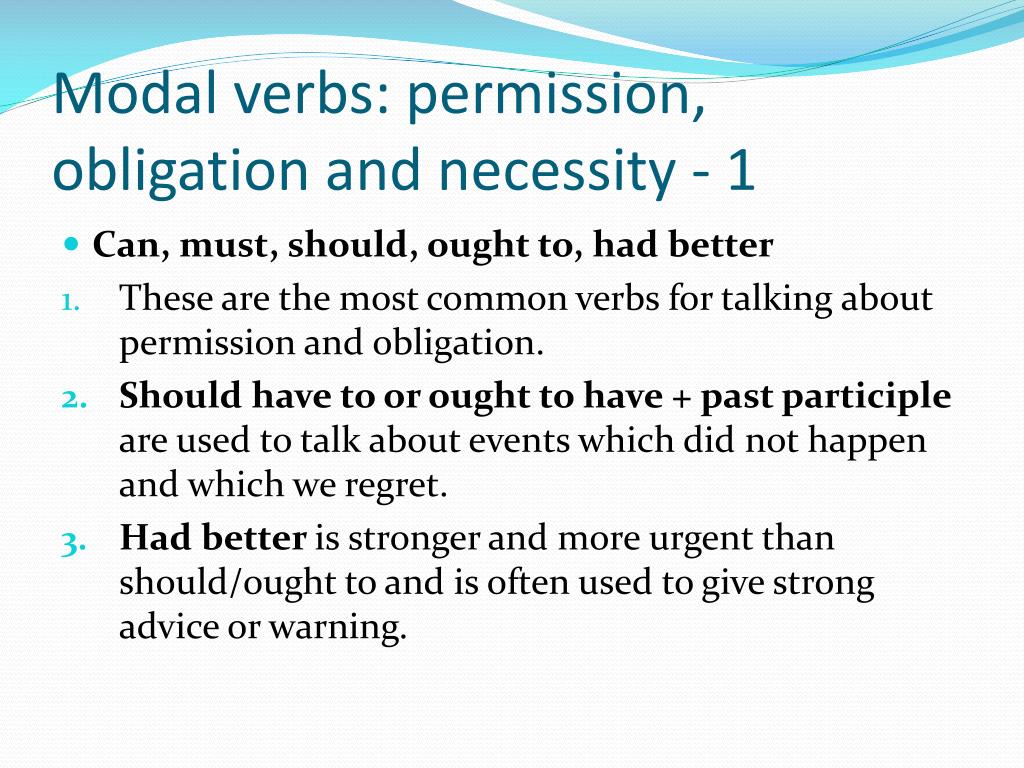
Ppt Modal Verbs Permission Obligation And Necessity 1 Powerpoint Presentation Id
Q Tbn And9gcsx0qsxcbscaga0xuec2t2sib587h2franfydw 7a9t5dzj5i G Usqp Cau
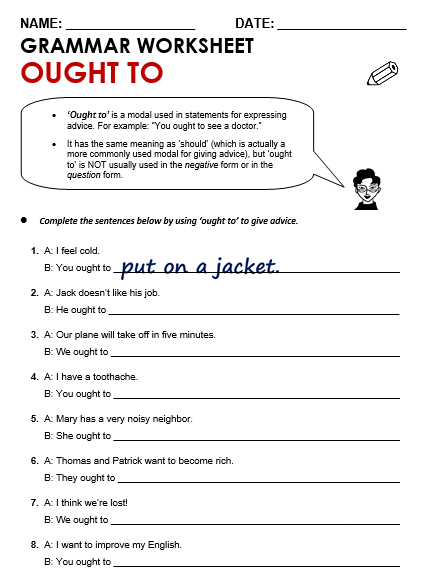
Ought To All Things Grammar
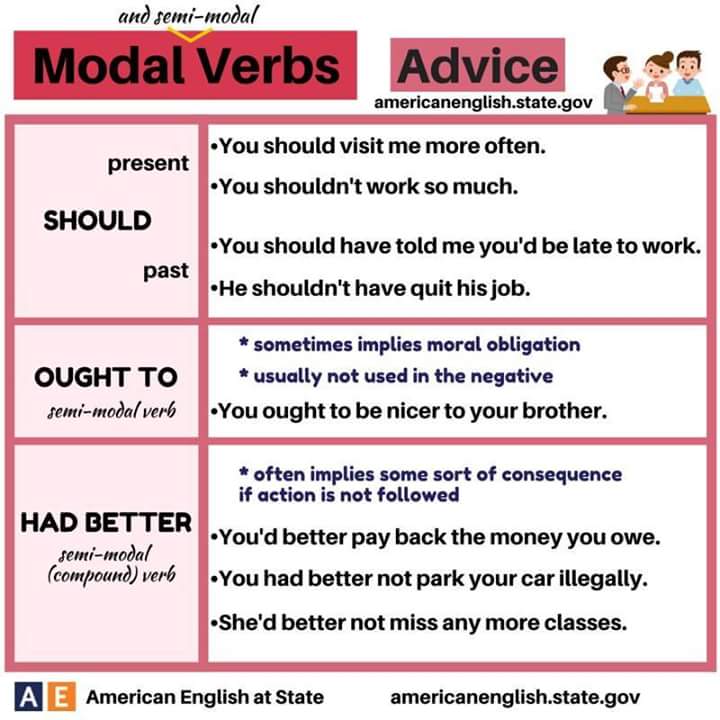
Modal Verbs Advice And Probability English Learn Site

Modal Verbs Grammar Exercises
Teach Should And Ought To Advisability Modals Off2class

Modal Verbs And How To Use Them Xterraweb

Modal Verbs Should Ought To Have To Y Must

Modal Verbs Expressing Advice Worksheet
Tips On Modal Verb

Ought To When And How To Use English With A Smile
Difference Between Ought To And Should Myenglishteacher Eu Blog
Modal Verbs The Online Guide Wall Street English
Masterprep A Modal Verb Is A Type Of Verb That Is Used Facebook
Everyday Grammar You Had Better Learn Modals
Modal Verbs The Online Guide Wall Street English
/Getty_marginal_modal-185278342-57d74e835f9b589b0a9fb280.jpg)
Definition And Examples Of Marginal Modals In English
Modal Verbs Can May Shall Need Ought To Have To Would Should Used To Definition And Examples Lessons For English

Modal Verbs Have Must Need And Ought Get Great English

Modal Auxiliary Verbs Ought And Had Better
Should Vs Ought To English Grammar Level
Should Ought To Had Better

Should Ought To Had Better English Grammar Teaching English Grammar English Verbs
Should Ought To Had Better Must Modals Verbs Of Advice Ppt Download

Modal Verbs Should And Ought To English Esl Worksheets For Distance Learning And Physical Classrooms
Modal Verbs And Example Sentences Lessons For English
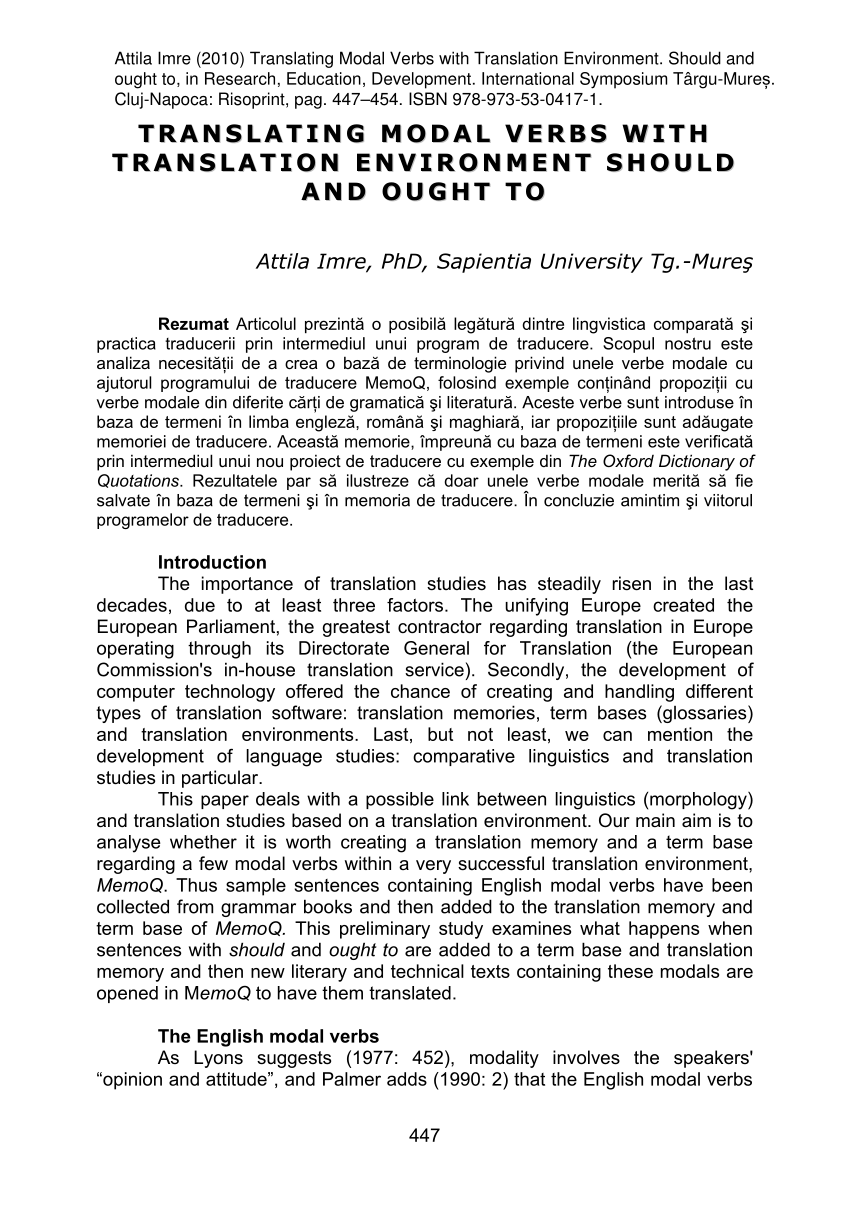
Pdf Translating Modal Verbs With Translation Environment Should And Ought To
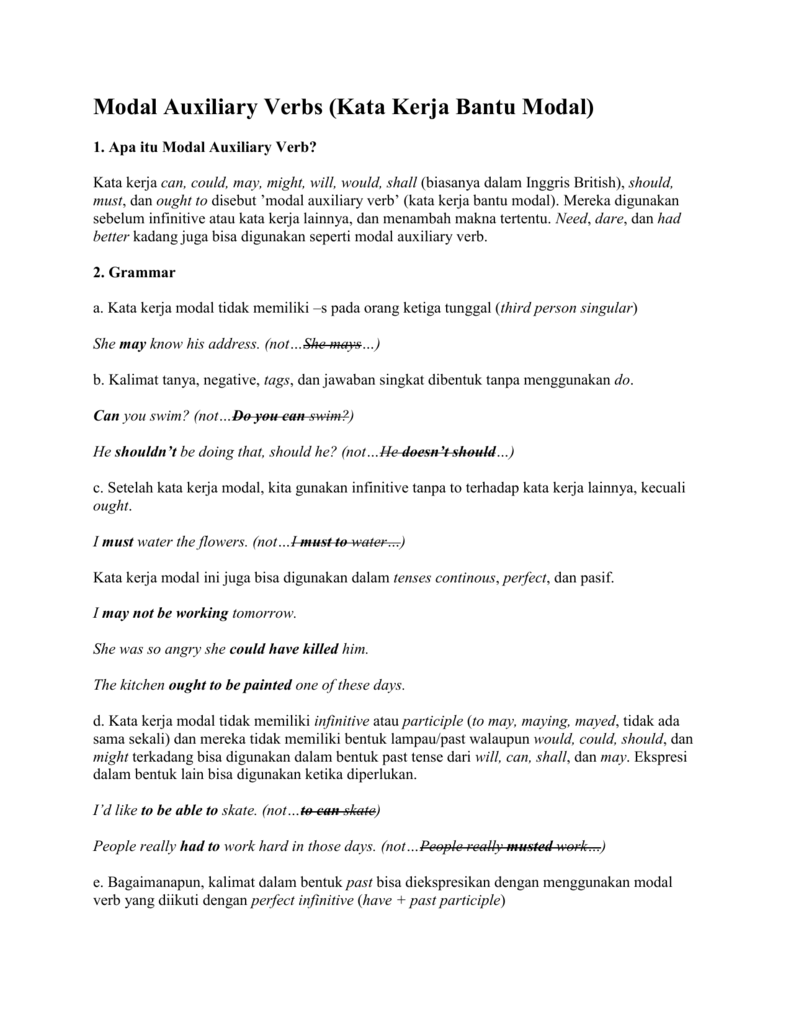
1 Apa Itu Modal Auxiliary Verb

Modal Auxiliary Verbs Meaning Types Rules Usage And Examples Grammarlite Com
Modal Verbs In English Grammar
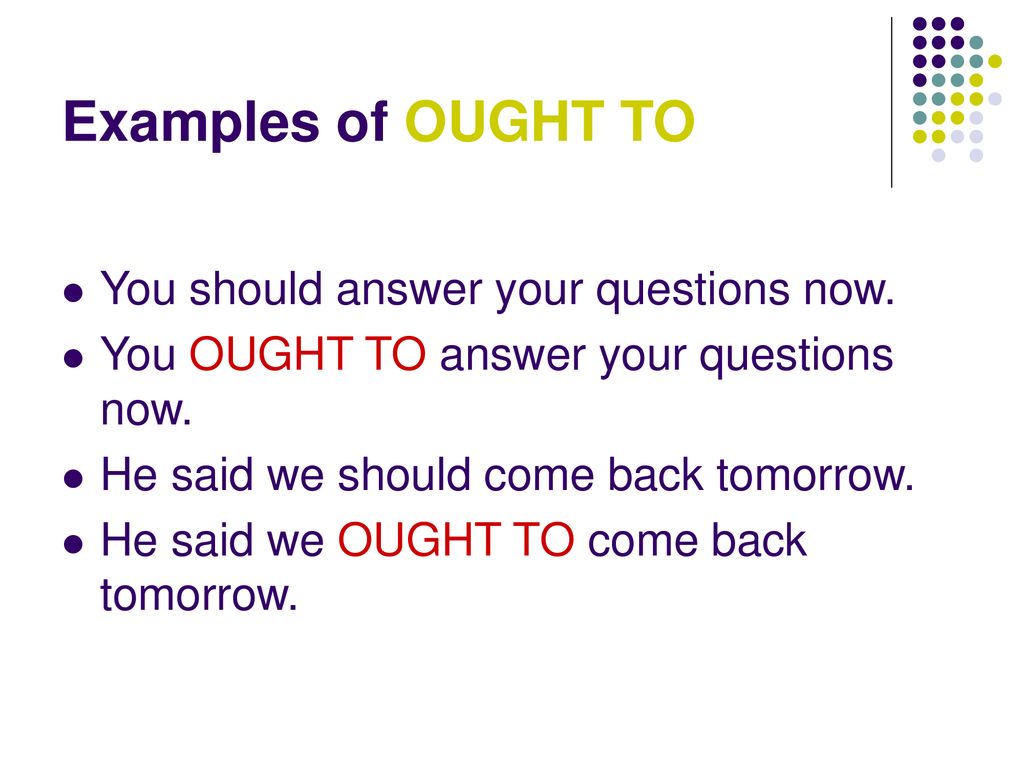
Can Could May Might Should Ought To Must Ppt Download

Modal Verbs In English English Study Here
Pdf Grammaticalization Of The Marginal Modal Verb Ought To A Corpus Based Approach 3 Semantic Scholar

Perfect Modal Verbs In English English Study Here

The Basics Of Modal Verbs One Point Grammar Lesson Happy English Free English Lessons
Modal Verbs Advice Should Ought To Had Better English Learn Site

Modal Verbs Should Ought To Have To Y Must
Yes No Questions With Modal Verbs English Study Page

مواضيع لتعلم اللغة الانجليزية مفيدة للجميع Modal Verbs I Can Could May Might Must Need To Have To Should Ought To Had Verb He Is Able I Can

Modal Verbs Levels Of Certainty We Can Use Modal Verbs To Show Our By Pmcfb Medium

Modal Verbs Useful Rules List And Examples In English Esl Grammar
What Is The Difference Between Should And Ought To Quora
General Rules Modal Verbs
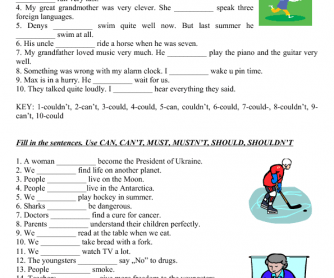
Modal Verb Practice Elementary Level

Pdf Grammaticalization Of The Marginal Modal Verb Ought To A Corpus Based Approach
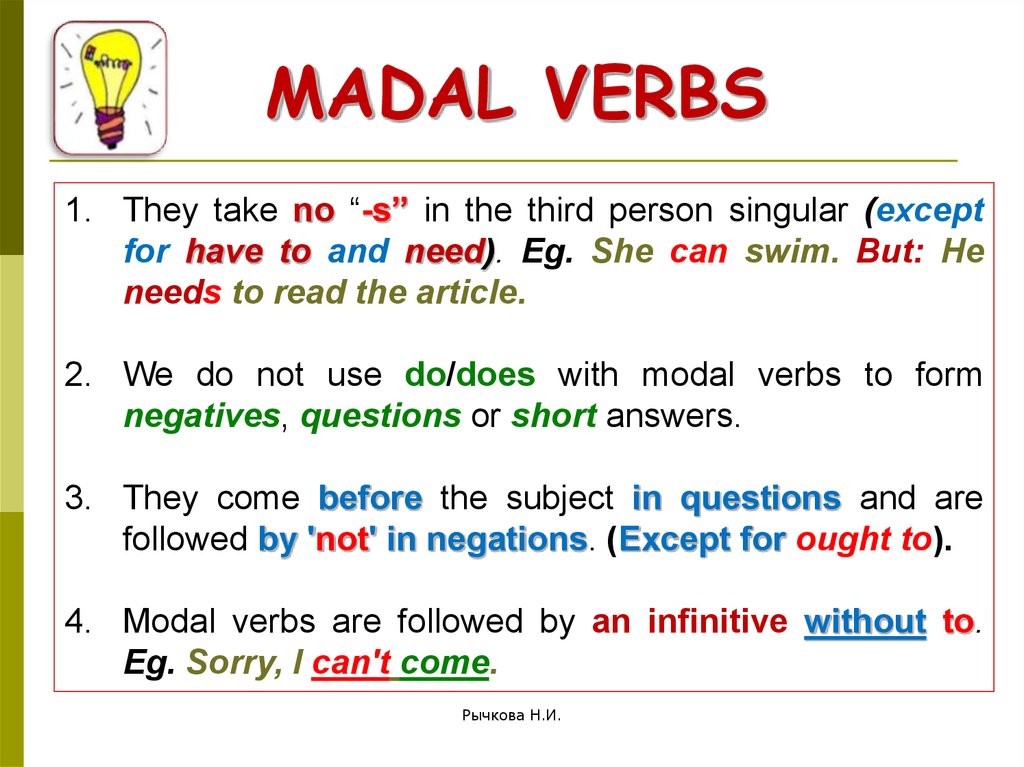
Modal Verbs Prezentaciya Onlajn
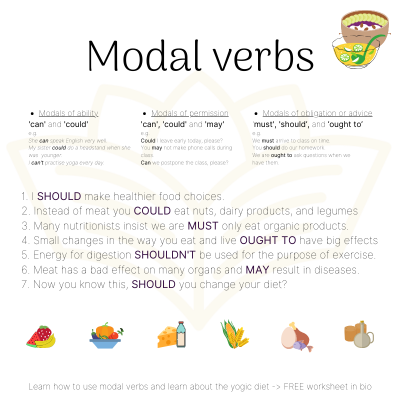
The Yogic Diet Modal Verbs Annie The Yogic Diet Modal Verbs

Semi Modal Verbs Dare Need Ought To Used To Be Able To Had Better Have To Modal Verbs Part 3 Youtube
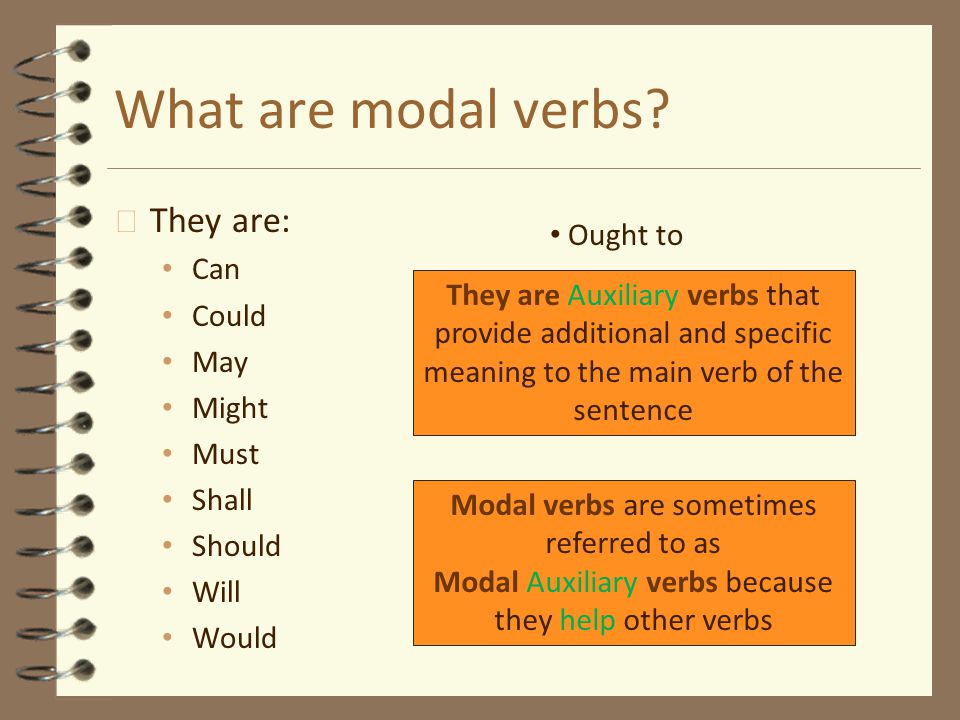
What Are Modal Verbs They Are Ought To Can Could May Ppt Video Online Download
Module 6 Modal Auxiliaries Cor Doc

Modal Verbs
Verbs Modal Verbs Have To Ought

Modal Verbs In English A Modal Verb 一起來學習英文 Learn English With Brian Facebook
Ought To Modal Auxiliary Verb English Grammar Level

Modal Verbs Selim Algul

Pin En English Language Esl Efl Learn English Vocabulary And Grammar
Pdf Root Modal Uses Of Should Ought To And Be Supposed To In Present Day English From Patterns And Profiles To Proficiency Guidelines


